
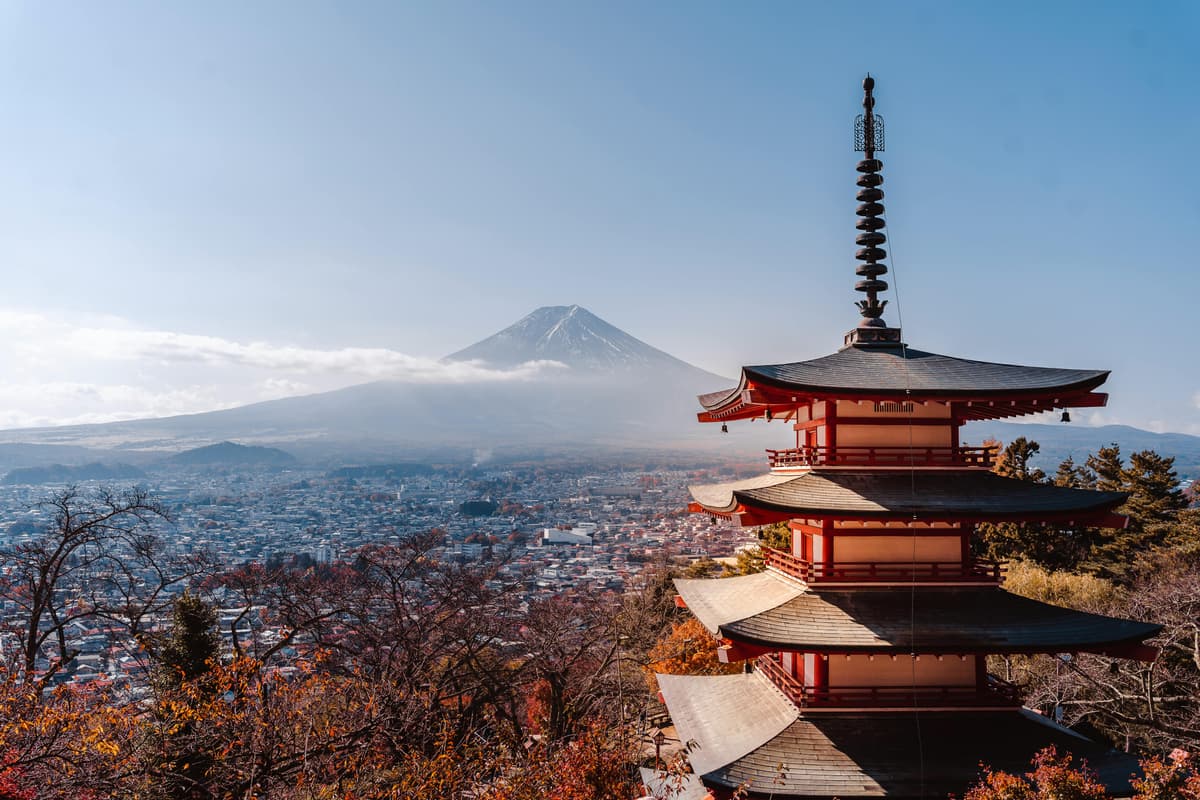
Japan stands out as one of Asia's most compelling destinations for employers and professionals alike. Home to a world-class workforce, a sophisticated consumer market, and one of the globe's largest economies, the country offers extraordinary opportunities for businesses ready to invest in the region. Whether you are building a remote team or establishing a physical presence, understanding the rules around hiring in Japan is essential to operating legally and competitively.
Key legal pillars governing employment in Japan include the Labor Standards Act, the Act on Securing, Etc. of Equal Opportunity and Treatment between Men and Women in Employment, and the Industrial Safety and Health Act. This guide walks through everything U.S. employers need to know, from minimum wage requirements and payroll in Japan to work permits, leave entitlements, and the termination process.
Key Facts About Employment in Japan
Information Category | Details |
Minimum Wage in Japan | National average of approximately ¥1,055 to ¥1,130 per hour (varies by prefecture); Tokyo leads at roughly ¥1,226 per hour |
Standard Workweek | 40 hours per week / 8 hours per day. |
Payroll Frequency | Monthly processing. |
Fiscal Year | April 1 to March 31. |
Main Employment Laws | Labor Standards Act (LSA) Minimum Wages Act Employment Insurance Act Act on Childcare Leave and Caregiver Leave Equal Employment Opportunity Law (EEOL) Industrial Safety and Health Act |
Employment Contracts in Japan
Japan recognizes several contract types, each with distinct legal requirements under the Labor Standards Act:
- Permanent (Seishain) Contracts: This is the most common form of full-time, open-ended employment. Workers enjoy strong protections, including strict dismissal regulations and full access to social insurance.
- Fixed-Term Contracts: These are term-limited agreements. Where the total contract term with the same employer exceeds five years, an eligible employee may apply for conversion to an indefinite-term labor contract under the Labor Contract Act.
- Dispatch (Haken) Contracts: Dispatch work is governed by the Worker Dispatching Act. As a general rule, continued reception of the same dispatched worker in the same organizational unit of the client workplace may not exceed three years, although statutory exceptions apply.
Regardless of contract type, Japanese employment law requires that all employment contracts include specific mandatory details. These essential elements must be clearly documented in writing and provided to the employee:
- Job Title and Responsibilities: A clear description of the employee's role and primary duties
- Work Location: The physical location where work will be performed
- Working Hours: Daily and weekly hours, including start and end times
- Compensation: Base salary, payment frequency, and any allowances or bonuses
- Probation Period: Typically 3-6 months, during which easier termination is permitted with fair procedures
- Notice Period: The required advance notice for termination is generally 30 days
- Benefits and Leave Entitlements: Details regarding health insurance, pension contributions, annual leave, and other benefits
- Termination Conditions: Grounds and procedures for employment termination
Payroll, Taxes, and Social Security in Japan
Managing payroll in Japan involves navigating a multi-layered system of income tax withholding and shared social insurance contributions. Employers are responsible for registering with the relevant tax and social insurance authorities and deducting contributions at source each month.
Employer Payroll Contributions
Component | Rate |
Health Insurance | 5% of gross salary |
Employees' Pension (Welfare Pension) | 9.15% of gross salary |
Unemployment Insurance | 0.95% (from April 2025) |
Workers' Accident Insurance | 0.3%–0.9% (industry-based) |
Long-Term Care Insurance (age 40–64) | 0.795% |
Approximate Total Contribution | 15–16% of gross salary |
Employee Payroll Contribution
Component | Rate |
Health Insurance | 5% of gross salary |
Employees' Pension (Welfare Pension) | 9.15% of gross salary |
Unemployment Insurance | 0.55% |
Workers' Accident Insurance | None |
Long-Term Care Insurance (age 40–64) | 0.795% |
Approximate Total Contribution | 15% of gross salary |
Income Tax Bracket
Range | Rate |
Up to ¥1,950,000 | 5% |
Over ¥1,950,000 to ¥3,300,000 | 10% |
Over ¥3,300,000 to ¥6,950,000 | 20% |
Over ¥6,950,000 to ¥9,000,000 | 23% |
Over ¥9,000,000 to ¥18,000,000 | 33% |
Over ¥18,000,000 to ¥40,000,000 | 40% |
Over ¥40,000,000 | 45% |
Compensation & Benefits in Japan
Beyond the minimum wage mandates, employers typically offer a wider compensation package to remain competitive in the labor market. Below is an overview of the most common elements:
Benefit Type | Details |
Health Insurance | Mandatory enrollment generally applies where statutory coverage conditions are met. Public health insurance typically covers a substantial portion of insured medical costs, with the employee bearing the applicable co-payment under the health-insurance rules. |
Commuting Allowance | Standard practice is particularly prevalent in cities where employees rely on public transport. Typically covers actual transit costs. |
Summer & Year-End Bonuses | Traditionally, 13th- and 14th-month payments are made in summer (June/July) and December. These are customary rather than legally mandated, but remain a key recruitment tool. |
Pension | Mandatory enrollment in the Employees' Pension Insurance (Kōsei Nenkin). |
Housing Allowance | Common among larger employers, especially for relocated staff. |
Mandatory Wage Payment on Termination | All outstanding wages must be settled within seven days of an employee's departure. |
Working Hours and Overtime in Japan
Japan's Labor Act sets clear limits on working hours and mandates additional pay for work beyond those limits. Below is a summary of the key rules:
Category | Details |
Standard Hours | 8 hours/day, 40 hours/week |
Annual Overtime Limit | Maximum 360 hours per year, 45 hours per month |
Overtime Rate (up to 60 hrs/month) | 125% of the regular hourly rate |
Overtime Rate (beyond 60 hrs/month) | 150% of the regular hourly rate |
Holiday Work | 135% of regular wages |
Late-Night Work (10 PM–5 AM) | Additional 25% premium on top of the applicable base rate |
Flexible Work Arrangements | Under the 2025 amendments to the Child Care and Family Care Leave Act, employers must implement two or more measures to realize flexible working arrangements for workers raising children aged 3 to the age of compulsory school enrollment, from which eligible workers may choose. Separate effort obligations also apply for workers caring for younger children. |
Remote Work / Digital Nomad | Japan introduced a digital-nomad residence framework in 2024 under the status of residence “Designated Activities.” The permitted stay is up to 6 months and is not renewable under that status. Eligibility conditions include, among other things, overseas income and private health-insurance requirements under the immigration rules. |
Leave and Statutory Time Off in Japan
Japan's leave framework is governed primarily by the Labor Standards Act and the Act on Childcare Leave and Caregiver Leave. Significant reforms were introduced in 2024–2025 to strengthen parental leave provisions.
Leave Type | Details |
Paid Annual Leave (Yūkyū) | 10 days after 6 months of continuous service (with ≥80% attendance), rising to a maximum of 20 days after 6.5 years. Employers must designate at least 5 days of annual leave per year. |
Sick Leave | There is no statutory paid sick leave mandate in Japan. Employees typically use their annual leave entitlement when ill; many employers voluntarily provide 5–10 days of sick leave as a company benefit. |
Maternity Leave | 14 weeks total: 6 weeks before the expected due date and 8 weeks postpartum (the first 8 weeks postpartum are mandatory). Paid at ~67% of salary via social insurance. |
Paternity / Childcare Leave | Fathers may take "Papa Leave" (Sango Papa Ikukyū) for up to 4 weeks in the 8 weeks following birth. This can be combined with the standard childcare leave of up to 1 year (extendable to 18 months). As of April 2025, a new Post-Childbirth Leave Support Benefit raises compensation to 80% of gross salary for the first 6 months. |
Family Care Leave | Japan distinguishes between short-term caregiver leave and longer family care leave. Eligible workers may take short-term caregiver leave of 5 days per year for one family member requiring care, or 10 days for two or more family members. Separately, eligible workers may take family care leave of up to 93 days per family member, which may be divided into up to three separate periods. |
Bereavement Leave | Customarily provided for full-time employees (duration varies by relationship to the deceased); not legally mandated for part-time workers. |
Japan has 16 national public holidays. When a holiday falls on a Sunday, the following Monday is observed. The Golden Week period (late April–early May) sees many businesses close for extended periods.
- New Year’s Day
- Coming of Age Day (2nd Monday of January)
- National Foundation Day
- Emperor’s Birthday (February 23, Emperor Naruhito’s birthday)
- Vernal Equinox Day (around March 20)
- Showa Day
- Constitution Memorial Day
- Greenery Day
- Children’s Day
- Marine Day (3rd Monday of July)
- Mountain Day
- Respect for the Aged Day (3rd Monday of September)
- Autumnal Equinox Day
- Sports Day (2nd Monday of October)
- Culture Day
- Labor Thanksgiving Day
Hiring and Onboarding Process in Japan
Hiring in Japan requires careful compliance with documentation and registration requirements. Below are the key steps:
- Draft a Compliant Employment Contract: Issue a written employment notice specifying all mandatory terms under the Labor Standards Act before the employee's start date.
- Register with Social Insurance Authorities: Enroll the new hire in Employees' Health Insurance, Welfare Pension, Employment Insurance, and Workers' Accident Insurance (Rōsai Hoken) within the required deadlines.
- Tax Registration: Employers must apply the NTA’s withholding-tax rules to salary payments and collect the employee’s Individual Number (My Number) for tax and social-insurance reporting, subject to applicable privacy and handling rules.”
- Collect Onboarding Documents: Gather identification documents, residence-status documents where relevant, the employee’s Basic Pension Number information/notice where applicable, and any professional credentials relevant to the role.
- Work Permits for Foreign Hires: In many cases, the employer or sponsor first obtains a Certificate of Eligibility (COE), after which the individual applies for a visa at a Japanese embassy or consulate if required. Common work-related statuses of residence include Engineer / Specialist in Humanities / International Services, Highly Skilled Professional, and Intra-company Transferee.
- Onboarding Best Practices: Provide translated onboarding materials for non-Japanese speakers, conduct orientation sessions covering company rules (shūgyō kisoku), and assign a workplace mentor (onboarding contact) to ease cultural integration.
Termination & Notice Periods in Japan
Terminating an employee in Japan requires careful adherence to legal requirements and fair procedures. Understanding the framework for termination protects both employer and employee:
- Notice Requirements: Employers must provide at least 30 days' advance written notice of termination, regardless of employment duration. Alternatively, employers may pay 30 days' average salary in lieu of notice, allowing for immediate termination.
- Valid Reasons for Dismissal: Japanese law applies a strict standard under which a dismissal is invalid if it lacks objectively reasonable grounds and is not considered appropriate in general societal terms. Employers, therefore, need case-specific, well-documented grounds and fair procedure. Performance, misconduct, and economic restructuring issues must be assessed carefully under that standard.
- Prohibited Terminations: Certain dismissals are prohibited, including dismissal during maternity leave before and after childbirth and within 30 days thereafter; dismissal during leave for medical treatment of a work-related injury or illness and within 30 days thereafter; and dismissal or other disadvantageous treatment on prohibited grounds such as sex, marriage, pregnancy, childbirth, union activity, or requesting or taking childcare or family-care related leave and measures protected by law.
- Severance Pay: Japan does not impose a general statutory severance pay requirement. Any severance arrangement depends on the employment terms, company policy, collective arrangements, and the facts of the separation
Useful Resources
For official and up-to-date information, refer to the following government and regulatory portals:
Other articles
Hiring in China
Hiring in South Korea
Disclaimer: This article is provided for informational purposes only and should not be relied on as legal advice or used as a substitute for advice from qualified legal counsel.