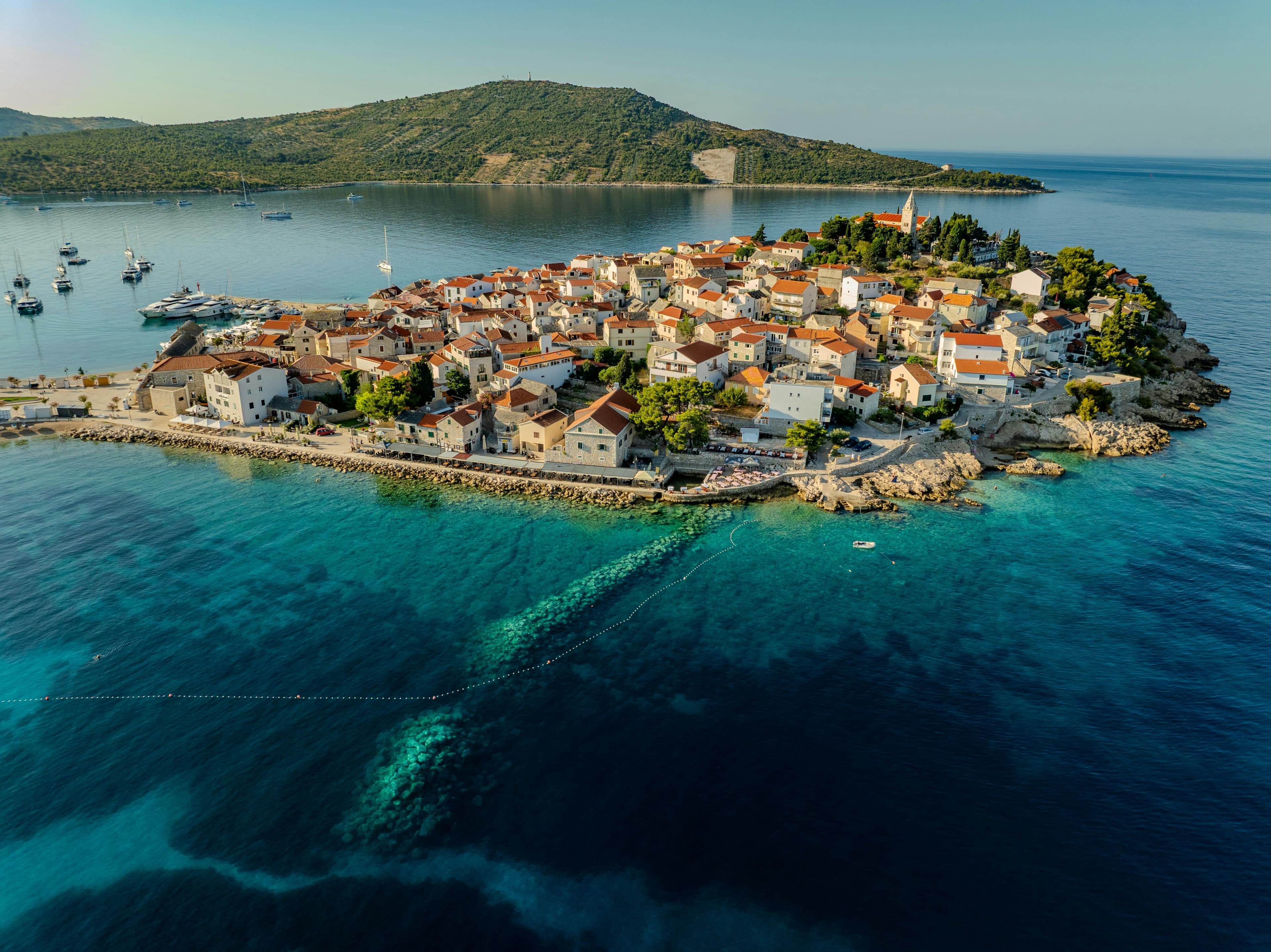
The culture in Croatia is heavily focused on work-life balance. Since joining the eurozone in 2023, Croatia has become an increasingly attractive destination for international employers. Whether you're an American business expanding into Europe or a global HR professional building a distributed team, hiring in Croatia offers a compelling mix of EU-standard labor protections, a growing skilled workforce, and competitive wage levels compared to Western Europe. This guide covers everything you need to know, from employment law requirements and payroll obligations to work permits and termination rules.
Key Facts About Employment in Croatia
Information Category | Details |
Minimum Wage in Croatia | €1,050 gross per month. |
Standard Workweek | 40 hours standard. |
Payroll Frequency | Monthly processing. |
Fiscal Year | Calendar year (January-December). |
Main Employment Laws | Labor Act (Zakon o radu) |
Employment Contracts in Croatia
All employment relationships in Croatia must be formalized in a written contract, typically signed before or on the employee's start date. The three main contract types are:
- Permanent (open-ended) contracts: This contract type is the default form of employment in Croatia and offers the highest level of legal protection. For this contract type, termination requires a valid, documented reason.
- Fixed-term contracts: This contract type is used exceptionally where the duration of work is limited by a deadline, completion of a task, or occurrence of an event. The general limit is up to three years and three contracts.
- Temporary/part-time contracts: This contract type is used for specific projects or reduced schedules, but is subject to the same core protections as full-time contracts.
Every employment contract must include the following details:
- Job title and description of duties
- Start date and contract duration (if fixed-term)
- Gross salary and payment schedule
- Working hours (daily and weekly)
- Probation period: Can be agreed upon by both parties; the maximum is 6 months for most roles
- Notice period terms
- Place of work, including any remote work arrangements
- Reference to applicable collective agreements, if any
Payroll, Taxes, and Social Security in Croatia
Understanding payroll in Croatia requires familiarity with the country's contribution structure and the 2024 reform that replaced the old municipal surtax system with a location-based income tax rate model.
Employer Contributions
Contribution Type | Rate |
Health Insurance (HZZO) | 16.5% of gross salary (no cap) |
Employee Contributions
Contribution Type | Rate |
Pension — Pillar I | 15% of gross salary |
Pension — Pillar II | 5% of gross salary |
Total Pension Contribution | 20% of gross salary |
Income Tax Brackets
Category | Rate |
Income Tax — Lower Bracket | 15%–23% on income up to €60,000/year (varies by municipality) |
Income Tax — Upper Bracket | 25%–35% on income exceeding €60,000/year |
Compensation & Benefits in Croatia
Benefit type | Details |
Health Insurance | Mandatory public health coverage via the Croatian Health Insurance Fund (HZZO); many employers supplement with private health insurance. |
Voluntary Pension Contributions | Offered by many employers as an added benefit. |
Disability Employment Quota | Employers with at least 20 employees are generally subject to quota rules for employing persons with disabilities. The quota is generally 3% of the workforce. |
13th Month Pay | This is a common practice, but not legally mandated. |
Christmas / Holiday Bonus | Customary across most industries. |
Meal Allowance | This is a standard benefit provided in Croatia. Specific amounts vary by employer or collective agreement, but it is usually €1,800 annually. |
Transportation Allowance | This is another common benefit, especially for employees commuting to an office. The amount is around €50 per month. |
Remote Work Allowance | Up to €70/month for regular home workers. |
Working Hours and Overtime in Croatia
Category | Details |
Standard Working Hours | 40 hours/week; 8 hours/day. |
Maximum Weekly Hours (incl. overtime) | Total regular work plus overtime may not exceed 50 hours/week. |
Annual Overtime Cap | Generally 180 hours/year; up to 250 hours/year if allowed by collective agreement. |
Overtime Compensation | Workers are entitled to increased pay for overtime, difficult working conditions, night work, and work on Sundays/holidays/non-working days. The amount is set by collective agreement, employment ordinance, or contract. |
Remote / Flexible Work | Legally recognized, employees can request temporary remote work, and employers must provide a written reason if denied. |
Leave and Statutory Time Off in Croatia
Croatia provides a comprehensive suite of statutory leave entitlements, closely aligned with EU directives.
Leave Type | Description | Pay |
Paid Annual Leave | Minimum 20 working days (4 weeks) per year after 6 months of service. For hazardous roles, the minimum paid annual leave period is 25 working days. | 100% of salary |
Leave Carryover | Unused leave must be taken by June 30 of the following year | — |
Public Holidays | 13 national public holidays | Paid day off |
Sick Leave (first 42 days) | Paid by the employer at a minimum of 70% of the average net salary in the prior 6 months. | 70%+ (employer-funded) |
Sick Leave (from day 43 onward) | Reimbursed by HZZO (Croatian Health Insurance Fund). | 70%+ (state-funded) |
Maternity Leave | Mandatory maternity leave generally starts 28 days before the expected birth date, or 45 days before in prescribed cases, and continues until the 70th day after birth. Additional maternity leave may continue until the child reaches six months. | 100% of salary (via HZZO) |
Paternity Leave | 20 working days for one child; 30 working days for twins/multiples | 100% of salary (state-funded, no cap) |
Parental Leave | 8 months per child (first/second); 30 months for twins or third+ child; usable until child turns 8 | HZZO-funded; subject to caps |
Personal Leave | Up to 7 paid days/year for personal circumstances (marriage, bereavement, serious illness of a family member) | Paid |
Bereavement Leave | Up to 7 days for the death of an immediate family member | Paid |
Personal Care Leave | Up to 5 days/year for caring for a close family member |
The following are the public holidays in Croatia:
- New Year’s Day
- Epiphany
- Easter Sunday (date varies)
- Easter Monday (date varies)
- Corpus Christi (date varies)
- Labor Day
- Statehood Day
- Anti-Fascist Struggle Day
- Victory and Homeland Thanksgiving Day and Croatian Veterans Day
- Assumption of Mary
- All Saints’ Day
- Remembrance Day for the Victims of the Homeland War and Remembrance Day for the Victims of Vukovar and Škabrnja
- Christmas Day
- St. Stephen’s Day
Hiring and Onboarding Process in Croatia
Legally bringing on a new employee in Croatia involves several sequential steps:
- Draft and sign an employment contract in written form before or on the start date, in Croatian (bilingual versions are recommended for international hires)
- Register the employee with Croatian social security authorities (Croatian Pension Insurance Institute, HZMO, and HZZO for health insurance) before they begin work
- Register with the Tax Administration (Porezna uprava) for income tax withholding setup
- Collect the employee’s required personal identification and payroll data, including OIB where applicable, and maintain payroll/employment records.
- Provide a written statement of employment terms if not fully captured in the contract
- Conduct required workplace safety training, per the Occupational Safety Act, before the employee begins their duties
For foreign (non-EU) hires:
- EU/EEA/Swiss nationals can work in Croatia freely without a work permit.
- Non-EEA nationals require a combined work and residence permit before starting employment.
- The EU Blue Card is available for highly skilled non-EU workers earning at least 1.5x Croatia's average gross annual salary.
- Intracompany transfers are available for employees who have worked within the same multinational for at least 6 months.
- Short-term work visas (Type C) allow business visits up to 90 days within a 180-day period.
Termination & Notice Periods in Croatia
Croatia's employment law places meaningful protections on workers, particularly those on permanent contracts. Employers must follow strictly defined procedures.
- Valid grounds for dismissal include: business/economic reasons (redundancy), the employee's inability to perform their duties, repeated or serious misconduct, or failure to meet requirements during the probationary period.
- Sickness and pregnancy are not valid reasons for terminating a contract
- Written notice is mandatory: The employer must provide a written dismissal decision with reasons; for misconduct-related dismissals, the employee must receive a prior written warning and have the opportunity to respond.
- Statutory notice periods are tied to the length of service:
- Less than 1 year: 2 weeks
- 1–2 years: 1 month
- 2–5 years: 1 month + 2 weeks
- 5–10 years: 2 months
- 10–20 years: 2 months + 2 weeks
- 20+ years: 3 months
- Employees aged 50+ with 20+ years of service receive an additional 2 weeks; those aged 55+ receive an additional month
- Misconduct dismissals: Notice periods are halved; immediate dismissal is available for especially serious violations.
- Severance pay: Employees with at least 2 years of continuous service are entitled to severance calculated at one-third of average monthly gross salary (prior 3 months) × number of years of service, capped at 6 months' salary.
- Upon termination, employers must deregister the employee with tax and insurance authorities, pay all outstanding salary, unused holiday compensation, and any owed severance.
Useful Resources
- Croatian Labor Act (official text)
- Croatian Employment Service (HZZ)
- Croatian Health Insurance Fund (HZZO)
- Croatian Pension Insurance Institute (HZMIO)
- Ministry of Labor, Pension System, Family and Social Policy
- Croatian Tax Administration (Porezna uprava)
Check out Niural Global Payroll
Other articles
Hiring in Slovenia
Hiring in Hiring in Bosnia and Herzegovina
Disclaimer: This article is provided for informational purposes only and should not be relied on as legal advice or used as a substitute for advice from qualified legal counsel.