
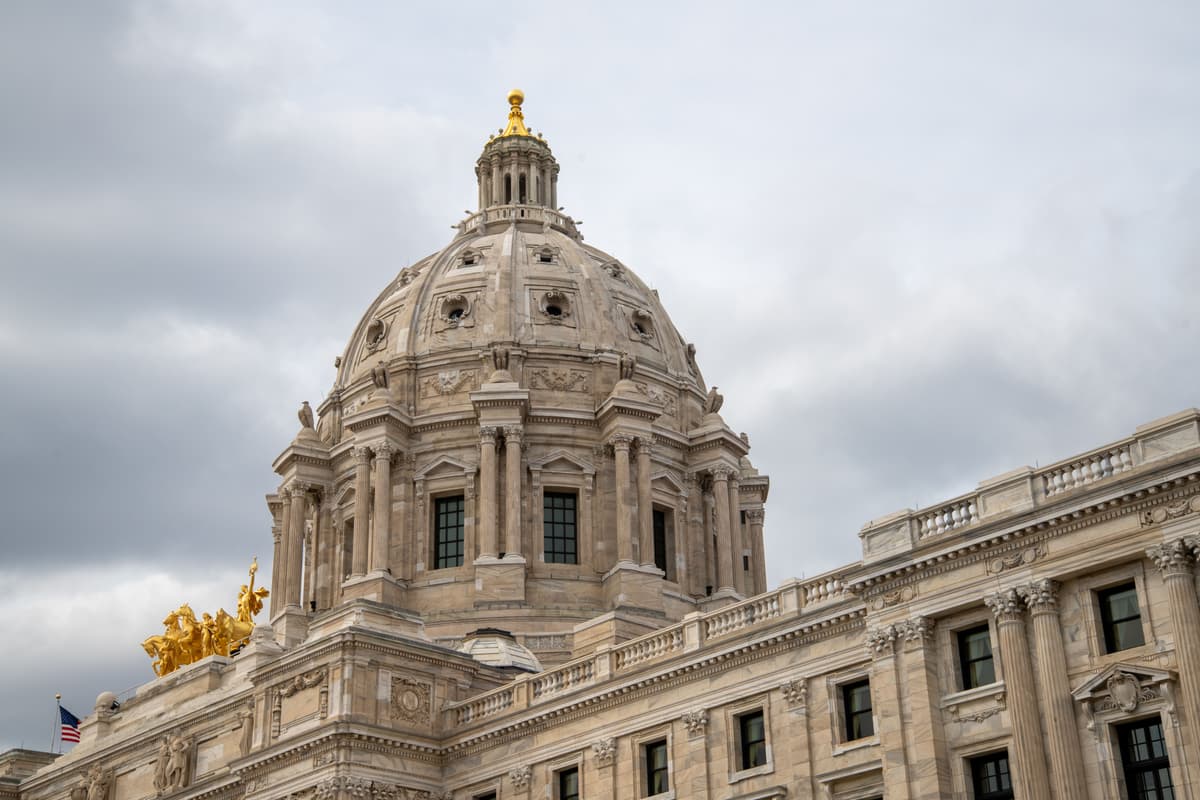
The Land of 10,000 Lakes, the North Star State, home to more Fortune 500 headquarters per capita than almost anywhere in the country. Hiring in Minnesota connects employers to a famously productive, well-educated workforce anchored by healthcare, medical technology, finance, agriculture, manufacturing, and a thriving Twin Cities innovation economy.
Minnesota has also moved quickly to expand worker protections, and 2026 is a big year, with a new statewide Paid Leave program now in effect. This guide summarizes the core requirements and points to official Minnesota and federal resources.
Key Facts About Employment in Minnesota
Information Category | Details |
Minimum Wage in Minnesota | $11.41 per hour statewide as of January 1, 2026. Minneapolis is $16.37, and St. Paul ranges from $14.25 to $16.37 depending on employer size. |
Standard Workweek | 40 hours is standard; Minnesota state overtime applies after 48 hours. |
Payroll Frequency | Wages must be paid on a regular payday at least once every 31 days. |
Fiscal Year | July 1 to June 30. |
Employment Contracts in Minnesota
Minnesota generally follows at-will employment, meaning either party may end the relationship at any time for any lawful reason, absent a contract or a protected characteristic.
- Most employers use offer letters rather than formal contracts. An offer letter commonly states the job title, start date, pay rate, pay frequency, exempt or nonexempt status, work location, and at-will language.
- Minnesota requires a standardized wage-notice form at hire. Employers must also provide each new employee a written earnings-statement notice covering items such as pay rate, basis of pay, allowances, and the employer's legal name and address, and must give written notice before any change to a rate of pay takes effect.
- Roles may be full-time, part-time, temporary, seasonal, fixed-term, or independent contractor; classification affects eligibility for programs such as Earned Sick and Safe Time and Paid Leave.
- Independent contractor classification is closely scrutinized, and misclassification can create tax, unemployment insurance, and workers' compensation liability.
Note: Minnesota broadly bans new noncompete agreements. Under a law effective July 1, 2023, covenants not to compete signed on or after that date are void and unenforceable for employees and independent contractors, regardless of pay, with narrow exceptions tied to the sale or dissolution of a business. Nondisclosure, nonsolicitation, and trade-secret agreements remain permitted, and out-of-state choice-of-law or venue clauses are restricted for workers who primarily reside and work in Minnesota.
Payroll, Taxes, and Employer Registration in Minnesota
Running payroll in Minnesota involves both state and federal obligations. Employers first obtain a federal EIN from the IRS, then register for a Minnesota Tax ID with the Department of Revenue for income tax withholding and register for an unemployment insurance account with the Department of Employment and Economic Development (DEED). Paid Leave premiums are reported and paid through the same DEED unemployment insurance system.
Payroll Requirement | Employer Obligation in Minnesota | Notes |
State tax registration | Register for a Minnesota Tax ID with the Department of Revenue and a UI account with DEED. | Obtain a federal EIN first. |
State income tax withholding | Withhold Minnesota income tax using federal Form W-4 and Minnesota Form W-4MN. | Rates are progressive, 5.35% to 9.85%; reciprocity applies with Michigan and North Dakota via Form MWR. |
Federal income tax withholding | Withhold based on each employee's Form W-4. | See IRS Publication 15 (Circular E). |
Social Security and Medicare | Withhold and match FICA taxes. | Federal requirement. |
Federal unemployment tax | Pay FUTA on covered wages. | Filed on Form 940. |
State unemployment insurance | Pay quarterly UI tax; file wage detail each quarter. | Employer-funded; may not be withheld from employees. |
Pay statements | Provide an itemized earnings statement each pay period. | Must reflect ESST hours information by a reasonable method. |
Final paycheck | Discharged employees: pay on demand, within 24 hours of demand. Employees who quit: by the next regular payday. | See Minnesota Statutes 181.13 and 181.14. |
Paid Leave (PFML) | Withhold the employee share and remit premiums quarterly through the UI system. | First premiums were due April 30, 2026. |
State retirement program | The Minnesota Secure Choice Retirement Program is being implemented; no payroll contribution applies yet. | Confirm current requirements with the state. |
Local payroll taxes | Minnesota imposes no local income or payroll taxes. | Local minimum wage and sick-time ordinances still apply. |
Remote payroll nexus | An employee working in Minnesota generally creates withholding, UI, and Paid Leave obligations. | Confirm with the Department of Revenue and DEED. |
The table below summarizes the main employer and employee payroll contribution rates that apply in Minnesota for 2026.
Contribution | Employee Rate | Employer Rate | Wage Base / Cap (2026) |
Social Security | 6.2%. | 6.2%. | $184,500. |
Medicare | 1.45%, plus 0.9% additional on wages over $200,000. | 1.45%. | No wage cap. |
Federal unemployment tax | None. | 6.0% before credits; as low as 0.6% with the full credit. | $7,000. |
State unemployment insurance | None. | New-employer rates vary by industry (roughly 1.0% to 8.9%) plus a 0.40% base rate and assessments. | $44,000. |
Paid Leave (PFML) | Up to 0.44%. | At least 0.44% (total premium 0.88%; small employers with 30 or fewer pay 0.66%). | $185,000. |
Disability insurance | None separately; covered within the Paid Leave program. | Same. | Not applicable. |
State retirement program | None currently. | None currently. | Not applicable. |
Minimum Wage, Compensation, and Benefits in Minnesota
The minimum wage Minnesota requires is set statewide and indexed to inflation each January 1, with higher local rates in Minneapolis and St. Paul.
Compensation Item | Requirement in Minnesota | Employer Notes |
State minimum wage | $11.41 per hour for all employers as of January 1, 2026. | One statewide rate now applies; the prior small/large tiers are gone. |
Tipped minimum wage | No tip credit is allowed. | Employees must receive at least the full minimum wage plus tips. |
Youth or training wage | $9.31 per hour for workers under age 20 during their first 90 consecutive days. | Reverts to full minimum wage after 90 days. |
Standout local ordinances | Minneapolis is $16.37 per hour. St. Paul ranges from $14.25 (micro) to $16.37 (large), with small-employer rates rising July 1, 2026. | Pay by where the work is performed. |
Pay deductions | Most deductions require written authorization after the loss or debt occurs and cannot drop pay below minimum wage. | Review before recovering costs from wages. |
Bonuses and commissions | Commissions are governed by the employer's commission agreement. | Define earning and payout terms in writing. |
Mandatory benefits | Workers' compensation, Earned Sick and Safe Time, and Paid Leave coverage. | Requirements vary by coverage. |
Optional benefits | Health insurance, retirement plans, PTO, remote-work stipends, and wellness benefits. | Competitive benefits help attract talent. |
Working Hours, Overtime, and Breaks in Minnesota
Work Rule | Requirement in Minnesota | Practical Employer Tip |
Standard workweek | 40 hours. | Define the seven-day workweek in writing. |
Federal overtime threshold | Over 40 hours per week at 1.5 times the regular rate. | Applies to most employers under the FLSA. |
State overtime threshold | Over 48 hours per week under the Minnesota Fair Labor Standards Act. | The 40-hour federal rule controls for most covered employers because it is more favorable. |
Daily overtime | No general daily overtime requirement. | Watch healthcare and other special schedules. |
Reporting-time pay | No state-specific requirement. | Follow any applicable local rules. |
Meal breaks | Unpaid 30 minutes when working 6 or more consecutive hours. | Fully relieve employees of duties to keep it unpaid. |
Rest breaks | Paid 15-minute break per 4 consecutive hours. | Count short breaks as hours worked. |
Day-of-rest rules | No general day-of-rest mandate for most private employers. | Confirm rules for specific covered industries. |
Minor labor rules | Minors face hour and occupation limits and may need work permits. | Verify before scheduling. |
Remote and flexible work | Track all hours for nonexempt remote employees, including overtime. | Use reliable timekeeping tools. |
Leave and Statutory Time Off in Minnesota
Type of Leave | Requirement in Minnesota | Paid or Unpaid |
Paid sick leave (ESST) | Earned Sick and Safe Time accrues at 1 hour per 30 hours worked, up to at least 48 hours a year, with carryover up to 80 hours. | Paid. |
Paid family and medical leave | Minnesota Paid Leave, effective January 1, 2026, offers up to 12 weeks medical and 12 weeks family leave, capped at 20 weeks combined per benefit year. | Paid by the state program. |
Federal FMLA | Eligible employees at covered employers may receive up to 12 weeks of job-protected leave. | Unpaid. |
Pregnancy or parental leave | Minnesota's Pregnancy and Parental Leave Act provides job-protected leave; Paid Leave may provide wage replacement. | Unpaid under PPLA; partial pay via Paid Leave. |
Jury duty | Employees may take leave for jury service and may not be penalized. | Unpaid unless policy provides otherwise. |
Voting leave | Employees may take paid time off to vote on election day. | Paid. |
Domestic violence / safe leave | ESST may be used for safety needs related to domestic abuse, sexual assault, or stalking. | Same as ESST. |
Military leave | Federal USERRA applies, and Minnesota provides additional protections. | Varies. |
School activities leave | Eligible employees may take limited leave for a child's school conferences or activities. | Generally unpaid. |
Bereavement leave | No general state-mandated bereavement leave; ESST may apply for certain situations. | Per policy or ESST. |
Hiring and Onboarding Process in Minnesota
- Register with the Minnesota Department of Revenue for a state Tax ID to handle income tax withholding, and register with DEED for an unemployment insurance employer account. Both should be set up before running payroll.
- Obtain workers' compensation insurance, which nearly all Minnesota employers must carry through a licensed private carrier or approved self-insurance; there is no state-run monopolistic fund.
- Confirm Paid Leave setup, since premiums are reported and paid through the DEED unemployment insurance system; employers with workers not covered by UI may need a Paid Leave-only account.
- Report each new hire and rehire to the Minnesota Department of Human Services through the Minnesota New Hire Reporting Center within 20 days of the hire date.
- Collect a completed federal Form I-9 to verify identity and work authorization, and retain it for the required period.
- Collect federal Form W-4 and Minnesota Form W-4MN for income tax withholding.
- Provide required earnings-statement information and any wage-change notices, and distribute required ESST and Paid Leave notices to employees in their primary language.
- Display required state and federal workplace posters, and provide electronic copies to remote employees in Minnesota where appropriate.
- Set up payroll consistent with the at-least-every-31-days payday rule, and verify any occupational licenses the role requires.
- Establish remote-work policies covering equipment, expense reimbursement, cybersecurity, and time tracking. Remember that work authorization for foreign workers is primarily a federal matter handled through USCIS.
Useful Official Resources
Disclaimer: This guide is for general informational purposes only and does not constitute legal, tax, or HR advice. Employers should consult official agencies or qualified counsel for guidance specific to their workforce.