
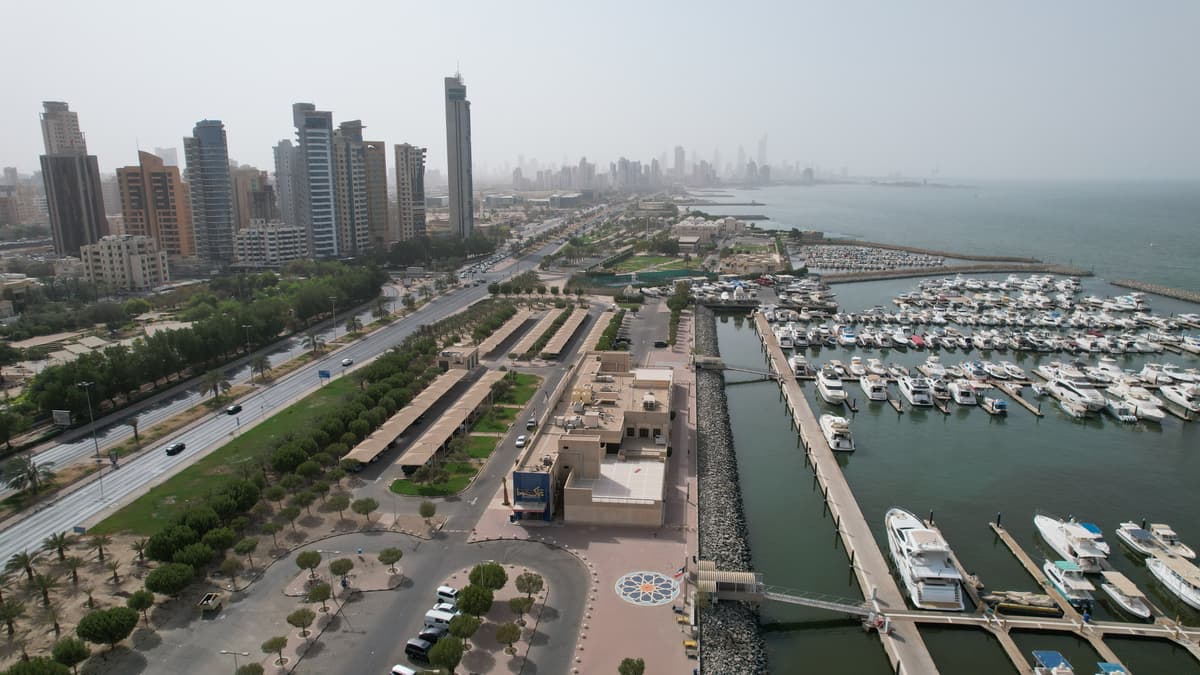
Bahrain has quietly become one of the most attractive Gulf destinations for American companies looking to expand into the Middle East. The kingdom offers zero personal income tax, a strategic location next to Saudi Arabia, English-friendly business environments, and a young, well-educated workforce.
For employers, hiring in Bahrain comes with a unique set of rules that differ significantly from US norms, including the Bahrainization quota system, a robust Wages Protection System, and mandatory social insurance contributions. This guide walks you through the essentials of employment law in Bahrain, including the minimum wage, payroll, employment contracts, statutory leave, termination requirements, and work permits.
Key Facts About Employment in Bahrain
Information Category | Details |
Minimum Wage in Bahrain | No statutory minimum wage for private sector workers. Bahraini nationals employed in the public sector are guaranteed BD 450 for university graduates, BD 380 for diploma holders, and BD 300 for secondary-school graduates and below. |
Standard Workweek | Up to 48 hours standard. |
Payroll Frequency | Monthly processing. |
Fiscal Year | Calendar year (January-December). |
Main Employment Laws | Labour Law for the Private Sector |
Employment Contracts in Bahrain
Bahraini labor law requires every employer to provide a written employment contract in Arabic, and a translated version may accompany it. The contract should always be denominated in Bahraini dinars and should clearly outline the terms of the working relationship.
The most common types of employment contracts in Bahrain include:
- Indefinite (permanent) contracts are the standard arrangement when no end date is specified. These provide the strongest protections for employees and are the default choice for most full-time hires.
- Fixed-term contracts are used when a specific project or seasonal period is involved. They automatically end on the date stated in the agreement and do not require notice from either side.
- Part-time contracts apply to employees working fewer hours than full-time staff, with benefits prorated according to hours worked.
- Temporary contracts cover short-term assignments, typically used to cover absences or peak business periods.
Every employment contract in Bahrain must include the following mandatory details:
- Full names of both parties
- Job title and description
- Agreed salary and any allowances
- Start date, the duration of the contract if fixed-term
- Place of work
- Probation period
- Notice period required for termination.
Contracts must also be registered with the LMRA for foreign hires and with the SIO for all employees.
Payroll, Taxes, and Social Security in Bahrain
Bahrain offers one of the most employer-friendly tax environments in the world. There is no personal income tax, no general corporate tax for most sectors, and no capital gains tax. Employers and employees instead make contributions to the Social Insurance Organization, which funds pensions, unemployment insurance, work injury coverage, and end-of-service benefits.
Employer Contributions
Contribution Type | Bahraini Nationals | Expatriate Employees |
Social insurance / pension-related contributions | 17% | Not applicable |
Unemployment insurance | 1% | 1% |
Work injury insurance | 3% | 3% |
End-of-service benefit (first 3 years) | Not applicable | 4.2% |
End-of-service benefit (after 3 years) | Not applicable | 8.4% |
Total approximate employer cost | 18% | 8.2% to 12.4% |
Employee Contributions
Contribution Type | Bahraini Nationals | Expatriate Employees |
Social insurance / pension-related contributions | 7% | Not applicable |
Unemployment insurance | 1% | 1% |
Total employee deduction | 8% | 1% |
The payroll cycle in Bahrain runs monthly, and all wages must be processed through the Wages Protection System using licensed banks or payment service providers. Under the enhanced WPS that took full effect in February 2026, employers must register a Wage Responsible Person, submit monthly salary files to the LMRA's Expatriate Management System for pre-validation, and complete payments by the 15th of the following month. Employees in Bahrain effectively take home their full gross salary minus social insurance deductions because there is no income tax, which is a major draw for expatriate talent.
Compensation & Benefits in Bahrain
While the minimum wage in Bahrain does not formally apply to the private sector, market rates and Bahrainization requirements create practical wage floors. The table below summarizes typical compensation and benefits.
Benefit Type | Details |
Health insurance | Bahrain’s mandatory health insurance framework applies to covered categories, including sponsored non-Bahraini workers. Employers should confirm current SEHATI implementation obligations for their worker category |
Housing allowance | Commonly offered, typically 10-25% of base salary, especially for expatriate hires |
Transportation allowance | Often included as a fixed monthly amount or company-provided transport |
Annual bonus | Not legally required, but performance-based bonuses are common in finance, oil and gas, and senior roles |
13th-month salary | Not mandatory under Bahraini law, though some employers offer it as a retention tool |
End-of-service gratuity | For non-Bahraini private-sector employees, end-of-service benefits are administered through SIO under Decision No. 109 of 2023, with employer subscriptions of 4.2% of monthly wages for each of the first three years of service and 8.4% thereafter. |
Employers hiring Bahraini nationals may also access Tamkeen wage subsidies, which can cover up to 70% of salary costs in the first year, declining over a three-year period.
Working Hours and Overtime in Bahrain
The working hours framework in Bahrain balances productivity with cultural and religious considerations, particularly during Ramadan.
Working Hours Element | Standard Rule |
Standard workweek | 48 hours, typically spread across six days |
Daily working hours | 8 hours maximum, with a mandatory break after no more than 6 consecutive hours |
Ramadan working hours for Muslim employees | Reduced to 6 hours per day with no salary reduction |
Weekly rest day | Friday is the official weekly rest day |
Maximum overtime per day | 2 hours per day |
Daytime overtime rate | Regular hourly wage plus a 25% premium |
Nighttime overtime rate | Regular hourly wage plus a 50% premium |
Overtime on rest day or public holiday | Regular hourly wage plus a 50% premium |
Employers cannot require an employee to work on the weekly rest day for more than two consecutive weeks without written consent from the worker.
Leave and Statutory Time Off in Bahrain
Bahraini employees enjoy generous statutory leave protections, and American employers should budget for these entitlements when planning workforce costs.
Leave Type | Entitlement |
Paid annual leave | 30 days per year after one year of service, accruing at 2.5 days per month before that |
Sick leave (first 15 days) | Full pay |
Sick leave (next 20 days) | Half pay |
Sick leave (final 20 days) | Unpaid |
Maternity leave | 75 days total, with the first 60 days paid and the remaining 15 days unpaid |
Paternity leave | 1 day of paid leave |
Iddah leave (for Muslim widows) | Up to 128 days |
Bereavement leave (other relatives) | 3 days of paid leave |
Marriage leave | 3 days of paid leave |
Pilgrimage (Hajj) leave | Up to 14 working days, once during employment, after five years of service |
Study and exam leave | Available for Bahraini employees pursuing accredited education |
Female employees who return from maternity leave are entitled to two daily nursing breaks of at least one hour each until the child turns six months old, followed by two 30-minute care breaks until the child turns one year old.
The following are the public holidays in Bahrain, including Islamic holidays whose exact dates depend on moon sightings.
- New Year's Day
- Eid Al Fitr
- Labor Day
- Arafat Day
- Eid Al Adha (3 days in May)
- Hijri/Islamic New Year
- Ashoora (2 days in June)
- Prophet Muhammad's Birthday
- Bahrain National Day
Hiring and Onboarding Process in Bahrain
Bahrainization is the workforce localization policy that requires private sector employers to maintain a minimum percentage of Bahraini nationals on staff, with quotas ranging from 5% to 60% depending on the industry and company size. Hiring Bahraini nationals is therefore not just a legal obligation but a strategic priority for any business operating in the kingdom.
Follow these steps to legally hire and onboard a Bahraini national:
- Register your business with the LMRA through the Expatriate Management System, which is required even when hiring locals because it tracks workforce composition.
- Post the job opening on the Tamkeen-supported national employment portal or through approved recruitment channels, as the 2026 hiring rules require employers to demonstrate that they have given preference to Bahraini candidates before seeking foreign workers.
- Conduct interviews and select the candidate, then issue a written employment contract in Arabic that includes all mandatory terms.
- Register the employee with the Social Insurance Organization within 30 days of the start date to ensure pension and unemployment contributions are properly tracked.
- Collect required onboarding documents, including the candidate's national ID (Bahraini CPR card), educational certificates, professional licenses where applicable, and bank account details for WPS payments.
- Apply for Tamkeen wage subsidies if eligible, since the program can cover up to 70% of salary costs in the first year for new Bahraini hires.
- Provide a structured onboarding experience that includes a company handbook, a clear explanation of leave and benefits, and assignment of a workplace mentor where possible.
For foreign hires, employers must additionally obtain LMRA approval, sponsor a work permit and residence visa, arrange the mandatory medical examination, and pay the relevant fees, all of which can take several weeks.
Termination & Notice Periods in Bahrain
Ending an employment relationship in Bahrain requires careful adherence to the labor law to avoid claims of unfair dismissal.
- Notice requirements: Indefinite-term contracts require a minimum of 30 days' written notice from either party, unless a longer period is specified in the contract. During the probation period, either party may terminate with at least one day's notice. Fixed-term contracts end automatically on the agreed date and require no notice.
- Valid reasons for dismissal: Justifiable grounds include serious misconduct, repeated breach of contract, prolonged unauthorized absence, fraud, conviction of a crime involving moral turpitude, or substantial business reasons such as redundancy. Article 107 of the labor law lists the specific circumstances permitting immediate dismissal without compensation.
- Severance pay basics: Employees on indefinite contracts who have completed at least three months of service are entitled to severance if dismissed without justifiable cause, calculated at two days' wages per month of service, with a minimum of one month's wages and a maximum of twelve months' wages.
- End-of-service benefits: For expatriate workers, end-of-service benefits are now funded through monthly SIO contributions and paid directly to the employee upon termination, rather than as a lump sum from the employer.
- Discriminatory dismissals: Termination based on gender, religion, ethnicity, or pregnancy status is considered unfair dismissal and exposes the employer to additional compensation claims.
Useful Resources
- Labour Market Regulatory Authority (LMRA)
- Social Insurance Organisation (SIO)
- Ministry of Labour
- Tamkeen (Labour Fund)
- Information & eGovernment Authority
Check out Niural Global Payroll
Other articles
Hiring in UAE
Hiring in Qatar
Disclaimer: This article is provided for informational purposes only and should not be relied on as legal advice or used as a substitute for advice from qualified legal counsel.