
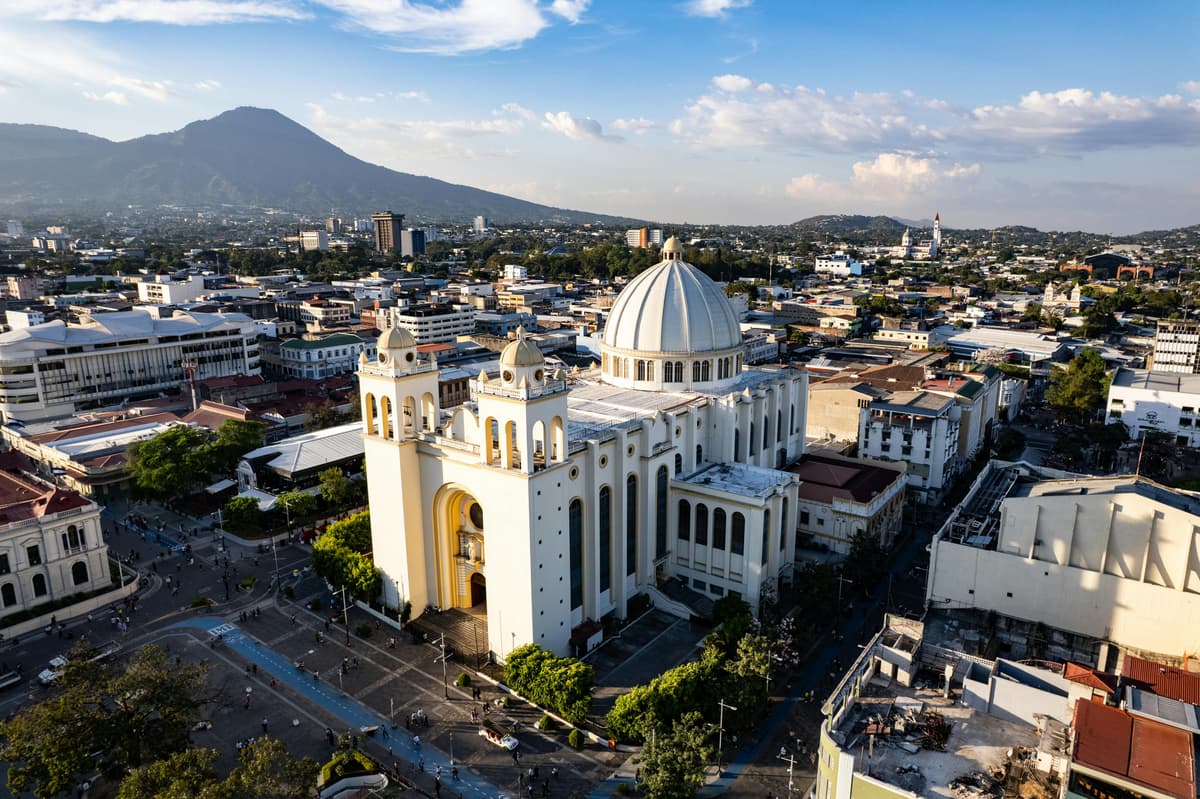
Hiring in El Salvador has become an increasingly attractive option for American employers seeking nearshore talent, thanks to the country's dollarized economy, favorable time-zone alignment with the United States, and a growing pool of bilingual professionals in technology, customer support, and finance. The use of the U.S. dollar as legal tender eliminates currency conversion risk, while competitive labor costs and strong cultural ties to North America make the country a compelling destination for outsourcing and global team building. However, employers must comply with the Salvadoran Labor Code, mandatory social security obligations, and sector-based minimum wage rules. This guide walks American companies through the essentials of employment law, payroll, and the practical steps required to hire, onboard, and retain Salvadoran talent.
Key Facts About Employment in El Salvador
Information Category | Details |
Minimum Wage in El Salvador | The minimum wage is set by industry sector, with the highest rate of USD 408.80 per month. |
Standard Workweek | 44 hours standard. |
Payroll Frequency | Weekly, bi-weekly, or monthly basis. |
Fiscal Year | Calendar year (January-December). |
Main Employment Laws | Salvadoran Labor Code (Código de Trabajo). |
Employment Contracts in El Salvador
Employment law in El Salvador requires that contracts be drafted in Spanish, with compensation denominated in U.S. dollars. While oral agreements are technically permitted, a written contract is strongly recommended to avoid disputes and to satisfy labor authority requirements. The main contract types include:
- Permanent (indefinite-term) contracts: These are the default form of employment in El Salvador and provide the strongest labor protections, including severance entitlements upon dismissal without just cause.
- Fixed-term contracts: These contracts are reserved for situations with an objective justification, such as a specific project, temporary task, or seasonal work, and they are treated as an exception rather than the rule under Salvadoran law.
- Probationary contracts: These arrangements allow either party to assess fit during the first 30 days of employment, during which the contract may be terminated without cause, notice, or severance, after which the relationship automatically converts to an indefinite-term contract if not ended.
- Professional Services contracts: These contracts are used to engage independent professionals or contractors for defined deliverables outside an employer-employee relationship, and they are governed by civil and commercial law rather than the Labor Code, which makes proper classification essential to avoid misclassification penalties.
- Interim contracts: These contracts cover the temporary replacement of a permanent employee who is on leave, such as maternity leave or extended sick leave, and they end automatically when the original employee returns to work.
Every employment contract should clearly state the following mandatory elements:
- The full job title and a description of duties.
- The agreed gross salary, payment frequency, and currency (USD).
- The probationary period, which cannot exceed 30 days under the Labor Code.
- The work location, working hours, and applicable rest days.
- Notice and termination procedures consistent with the Labor Code.
- Confidentiality, non-compete, and intellectual property clauses where relevant.
Payroll, Taxes, and Social Security in El Salvador
Payroll in El Salvador requires employers to withhold employee contributions, remit employer contributions, and apply progressive income tax (ISR) administered by the Ministry of Finance.
Employer Contributions
Contribution Type | Rate | Notes |
ISSS (Social Security – Health) | 7.50% of gross salary | Funds health coverage and workplace injury benefits. |
AFP (Pension Fund) | 8.75% of gross salary | Paid into the employee's individual pension account. |
Training and Education (INSAFORP) | 1% of gross salary | Agricultural employers may be subject to a lower rate of up to 0.25% |
Total employer burden | Approximately 17.25% |
Employee Contributions
Contribution Type | Rate | Notes |
ISSS (Employee share) | 3% of gross salary | Capped at a maximum monthly salary base of USD 1,000. |
AFP (Employee share) | 7.25% of gross salary | Capped at a maximum monthly salary base of USD 7,045.06 in 2026. |
Income Tax Brackets
Annual Taxable Income | Tax Formula |
Up to USD 6,600.00 | Exempt |
USD 6,600.01 – USD 9,142.86 | USD 212.12 + 10% of the excess over USD 4,064.00 |
USD 9,142.87 – USD 22,857.14 | USD 720.00 + 20% of excess over USD 9,142.86 |
Over USD 22,857.14 | USD 3,462.86 + 30% of excess over USD 22,857.14 |
There is no specialized expatriate tax incentive scheme, but the territorial system effectively shields foreign-source income for residents, which can benefit cross-border arrangements.
Compensation & Benefits in El Salvador
Beyond base salary, Salvadoran employees are entitled to several mandatory cash and non-cash benefits, and employers often supplement these to remain competitive in the local talent market.
Benefit Type | Detail |
Minimum wage (commerce, services, industry) | USD 408.80 per month, effective since the June 2025 adjustment and unchanged for 2026. |
Minimum wage (textile and apparel) | USD 402.32 per month. |
Minimum wage (sugarcane harvesting and coffee processing) | USD 305.23 per month. |
Minimum wage (agriculture and coffee harvesting) | USD 272.53 per month |
Aguinaldo (13th-month Christmas bonus) | Mandatory annual bonus paid between December 12 and December 20. Minimum amount is 15 days of basic salary for 1 to under 3 years of service, 19 days for 3 to under 10 years, and 21 days for 10 or more years. |
Vacation bonus | A 30% premium is added to the salary paid during the 15-day annual vacation. |
Health insurance | Public coverage is provided through ISSS; private health insurance is a common supplemental perk. |
Allowances | Meal vouchers, transportation stipends, and performance bonuses are widely offered to attract talent. |
Working Hours and Overtime in El Salvador
The Salvadoran Labor Code sets clear limits on working time and applies one of the highest overtime premiums in the region.
Item | Detail |
Daily limit (daytime) | 8 hours per day for daytime shifts. |
Night shifts (7:00 p.m. to 6:00 a.m.) | Limited to 7 hours per day and 39 hours per week. |
Overtime compensation | Paid at 200% of the regular hourly rate for hours worked beyond the standard schedule. |
Work on rest days and public holidays | Compensated at 50% at rest day and double the regular rate during public holidays. |
Leave and Statutory Time Off in El Salvador
Salvadoran employees are entitled to a robust set of statutory leave benefits, which employers must track and document carefully.
Leave Type | Entitlement |
Paid annual leave | 15 days per year after 12 months of continuous service, paid at 130% of the regular wage (the additional 30% is the vacation bonus). |
Sick leave | ISSS pays a daily subsidy equal to 75% of the base salary from the 4th day for common illness or accident, up to 52 weeks for the same illness, subject to ISSS rules. |
Maternity leave | 16 weeks / 112 days, with ISSS maternity subsidy at 100% of the base salary for the mother cotizante. |
Paternity leave | Three days of paid leave at 100% of regular pay, to be taken within 15 days of the birth or adoption of a child. |
The following are the public holidays observed in El Salvador:
- New Year's Day
- Holy Thursday
- Good Friday
- Holy Saturday
- Labor Day
- Mother's Day
- Father's Day
- Fiestas Patronales of San Salvador (August 3), regional holiday in San Salvador
- Fiestas Patronales of San Salvador (August 5), regional holiday in San Salvador
- Fiesta de San Salvador / Day of the Divine Savior of the World (August 6)
- Independence Day
- All Souls' Day
- Christmas Day
Hiring and Onboarding Process in El Salvador
- Decide on the hiring model, choosing between incorporating a local entity, working with an Employer of Record (EOR) that acts as the legal employer in El Salvador, or engaging independent contractors for clearly defined project work.
- Draft a Spanish-language employment contract that specifies the role, salary in USD, working hours, probation period, and termination conditions.
- Collect the new hire's identification documents, Salvadoran national identity document (DUI), tax identification number (NIT), and proof of address.
- Register the employee with ISSS from the first day of work, enroll them in their chosen AFP pension administrator, and set up income tax withholding with the Ministry of Finance.
- Provide a structured onboarding experience that covers internal policies, expectations, and any U.S. headquarters context, since cultural alignment is a major retention factor for Salvadoran talent working with American teams.
- For foreign hires relocating to El Salvador, secure the appropriate work permit and temporary residence permit through the Salvadoran immigration authority; these are typically valid for one to two years and may be extended for up to five years.
Termination & Notice Periods in El Salvador
Termination in El Salvador is governed by the Labor Code, and the country does not follow the U.S. at-will employment doctrine, so American employers should plan carefully before ending an employment relationship. Key requirements include:
- Notice periods are not strictly required by law after probation, but it is common practice for employees to give at least seven days' written notice once probation ends, while managerial or specialized employees may be expected to provide up to 30 days' notice.
- Valid grounds for dismissal with just cause are listed in Article 50 of the Labor Code and include serious misconduct, repeated negligence, dishonesty, unjustified absences, intoxication at work, and disclosure of confidential information.
- Severance pay (indemnización): For dismissal without just cause, indemnity is generally calculated by reference to 30 days of basic salary for each year of service, subject to statutory limits and calculation rules under the Labor Code.
Resignation by the employee and contracts that end naturally on their fixed term do not trigger severance, but accrued vacation, proportional aguinaldo, and outstanding wages must still be paid.
During the 30-day probationary period, either party may end the contract without notice or severance, provided the probation is documented in the written contract.
Useful Resources
Check out Niural Global Payroll
Other articles
Hiring in Guatemala
Hiring in Honduras
Disclaimer: This article is provided for informational purposes only and should not be relied on as legal advice or used as a substitute for advice from qualified legal counsel.