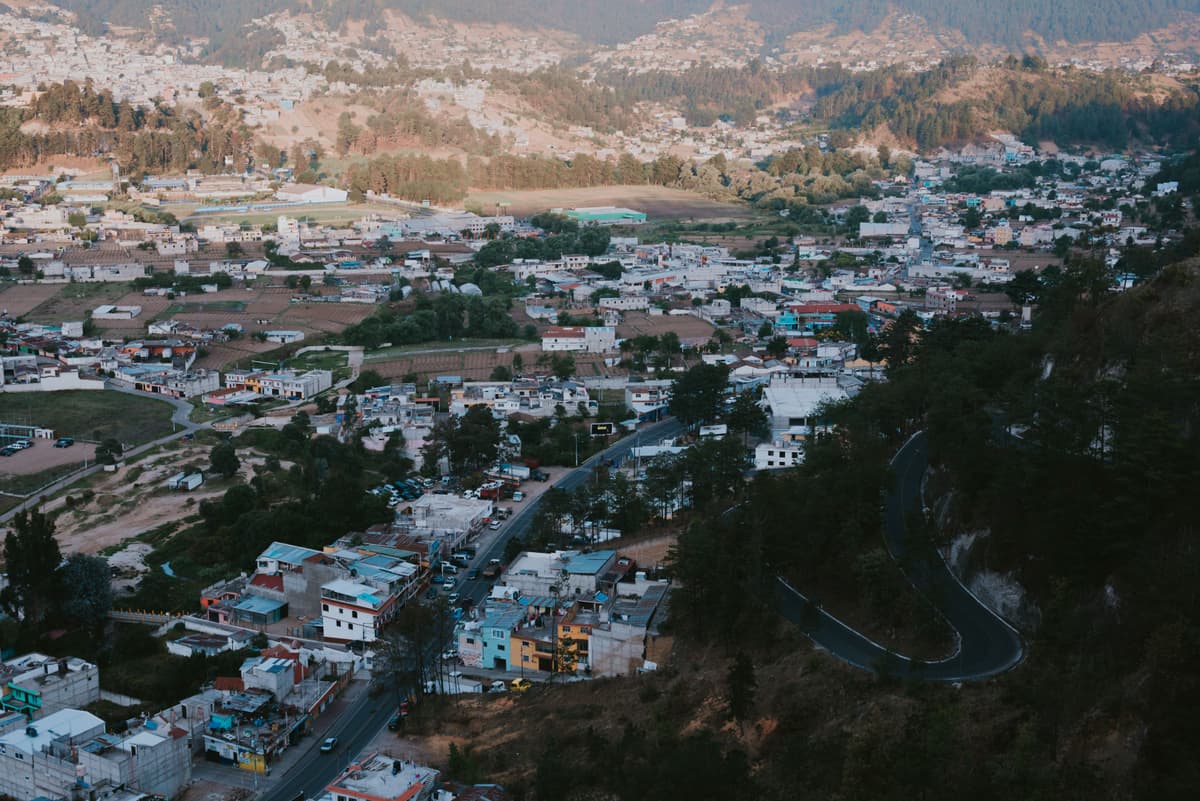
Guatemala offers a growing pool of tech-savvy talent, strong alignment with U.S. working hours, and reliable infrastructure, making it an increasingly attractive destination for companies expanding into Central America. At the same time, Guatemalan employment is tightly regulated under the labor code (Código de Trabajo, Decree 1441), and 2026 has brought meaningful changes, including the largest minimum wage increase in a decade and stronger labor inspection enforcement. This guide walks American employers through the essentials of hiring in Guatemala, from the new minimum wage to taxes, benefits, leave, work permits, and termination rules.
Key Facts About Employment in Guatemala
2026 Monthly Minimum Wage Rates
Sector | Guatemala Department (CE1) | Rest of Country (CE2) |
Non-agricultural | Q4,252.28 | Q4,066.90 |
Agricultural | Q4,041.20 | Q3,875.89 |
Export & maquila | Q3,659.73 | Q3,471.10 |
Information Category | Details |
Standard Workweek | 44 hours standard. |
Payroll Frequency | Monthly processing. |
Fiscal Year | Calendar year (January-December). |
Main Employment Laws | Labor Code (Decree 1441) IGSS Organic Law (Decree 295) Income Tax Law (Decree 10-2012) |
Employment Contracts in Guatemala
Guatemalan law strongly favors written contracts in Spanish, registered with the Ministry of Labor within 15 days of execution. Verbal contracts are permitted only for very limited cases such as short-term agricultural work, domestic service, or temporary assignments not exceeding 60 days. The labor code recognizes three primary contract types:
- Indefinite-term contracts (contratos por tiempo indefinido): This is the default and most widely used contract. It has no end date and can only be terminated by mutual agreement, by the employee resigning, or by the employer following lawful dismissal procedures.
- Fixed-term contracts (contratos a plazo fijo): These run for a specific period stated in the contract. Repeated renewals can cause a fixed-term agreement to be reclassified as indefinite, so American employers should use them carefully.
- Specific-task contracts (contratos por obra determinada): These tie the employment relationship to the completion of a defined project and end automatically once that work is finished.
Every written employment contract should clearly include the job title and description, base salary and any allowances, work schedule and location, payroll frequency, probation period (commonly two months), notice period, contract duration if applicable, intellectual property and confidentiality terms, and the grounds and procedure for termination.
Payroll, Taxes, and Social Security in Guatemala
Payroll in Guatemala is administered through two main authorities: the Superintendencia de Administración Tributaria (SAT) for income tax and the Instituto Guatemalteco de Seguridad Social (IGSS) for social security. Both employers and employees contribute, but the employer carries the larger share of statutory costs.
Employer Contributions
Contribution Type | Rate / Amount | Notes |
IGSS social security | 10.67% of gross salary | Covers healthcare, maternity, pensions, and workplace accidents |
IRTRA | 1.00% | Worker recreation and tourism facilities |
INTECAP | 1.00% | Technical and vocational training |
Bonificación Incentivo | GTQ 250 per month | Mandatory monthly bonus for every full-time employee |
Employee Contributions
Contribution Type | Rate | Notes |
IGSS social security | 4.83% of gross salary | Deducted automatically from each paycheck |
Income tax (ISR) – first bracket | 5% on annual taxable income up to GTQ 300,000 | After the GTQ 48,000 standard deduction |
Income tax (ISR) – second bracket | 7% on the excess over GTQ 300,000 | Plus a fixed GTQ 15,000 on the first bracket |
VAT credit | Up to GTQ 12,000 annually | Personal expense credit applied against income tax |
Compensation & Benefits in Guatemala
Guatemala combines a relatively low cash wage floor with several mandatory cash benefits that significantly raise the total package.
Benefit Type | Mandatory or Common | Details |
Bonificación Incentivo | Mandatory | Flat GTQ 250 monthly bonus, not subject to IGSS or ISR |
Aguinaldo (13th salary) | Mandatory | One month’s salary paid in December–January |
Bono 14 (14th salary) | Mandatory | One month’s salary paid in July |
IGSS healthcare | Mandatory | Public health coverage funded by employer and employee contributions |
Private health insurance | Common (not mandatory) | Frequently offered to attract bilingual and professional talent |
Meal, transportation, or productivity allowances | Common | Often used to enhance net compensation |
Performance bonuses | Common | Discretionary, structured by employer policy |
Working Hours and Overtime in Guatemala
Guatemala’s Labor Code regulates working time tightly, with separate limits for daytime, nighttime, and mixed shifts. Workers must receive at least 12 hours of rest between shifts and one paid rest day per week, usually Sunday.
Item | Details |
Daytime workweek | 44 hours, generally over 6 days |
Daytime workday | 8 hours maximum |
Nighttime workweek | 36 hours |
Nighttime workday | 6 hours maximum |
Mixed-shift workweek | 42 hours |
Mixed-shift workday | 7 hours maximum |
Maximum daily hours (with overtime) | 12 hours |
Overtime rate | 150% of the regular hourly wage |
Work on a public holiday | Paid at double the ordinary salary |
Weekly rest | 1 paid day, typically Sunday |
Flexible and remote work | Permitted by written agreement; remote contracts must define equipment, costs, and supervision |
Leave and Statutory Time Off in Guatemala
Statutory leave in Guatemala is governed by the labor code and supplemented by IGSS rules.
Leave Type | Details |
Paid annual leave | 15 working days after one full year of service, paid in advance of vacation |
Sick leave | Where the worker is covered by IGSS, benefits are handled under IGSS rules, and the employer pays only what IGSS regulations require. Where the worker is not protected by IGSS benefits and no other rule applies, the employer grants leave and pays half salary for one, two, or three months depending on the the length of continuous service. |
Maternity leave | 12 weeks (84 days) total, typically 30 days prenatal and 54 days postnatal, paid at 100% of salary by IGSS when eligible |
Paternity leave | 2 paid days |
Marriage leave | 5 paid days |
Bereavement leave | 3 paid days for the death of a close family member |
Mother’s Day (women only) | Paid day off on May 10 by the Government Accord |
The following are the public holidays in Guatemala:
- New Year’s Day
- Maundy Thursday
- Good Friday
- Holy Saturday
- Labor Day
- Army Day
- Assumption Day, observed only in Guatemala City
- Independence Day
- Revolution Day
- All Saints’ Day
- Christmas Eve, half-day from noon
- Christmas Day
- New Year’s Eve, half-day
Hiring and Onboarding Process in Guatemala
- Choose your hiring vehicle: Either set up a Guatemalan subsidiary registered with SAT and IGSS, or engage an EOR that already holds those registrations. The EOR route is faster and removes the need for U.S. companies to establish a legal entity.
- Register the employer: Any employer with three or more workers must register with IGSS (inscripción patronal), obtain a NIT (tax identification number) from SAT, and maintain authorized salary books if the workforce exceeds ten employees.
- Draft the employment contract: Prepare a written contract in Spanish covering the items listed earlier, then file it with the Ministry of Labor within 15 days of signing.
- Enroll the new hire with IGSS: Enroll the worker with IGSS through the applicable IGSS process from the start of the employment relationship.
- Collect onboarding documents: Standard documents include the DPI (national ID), NIT certificate, IGSS affiliation card, bank account details, RENAS (criminal background) clearance, and academic or professional credentials where relevant.
- Set up payroll: Configure monthly IGSS and ISR withholdings and schedule the Bonificación Incentivo, Aguinaldo, and Bono 14 payments.
- Run a structured onboarding: Provide a written job description, performance expectations, internal policies translated into Spanish, and equipment for remote roles. A two-month probation period is standard and worth using thoughtfully.
- Work permits for foreign hires: If the company also relocates a U.S. or other foreign national to Guatemala, the employer applies through MINTRAB’s PEX platform for a work permit and supports the worker’s Temporary Resident Visa for Work through the General Directorate of Migration. Under Article 13 of the labor code, employers generally may not employ fewer than 90% Guatemalan workers or pay Guatemalan workers less than 85% of the total payroll, subject to statutory exceptions and authorized modifications.
Termination & Notice Periods in Guatemala
Guatemala is an employee-protective jurisdiction. Severance for dismissal without just cause is sizable, and the employer bears the burden of proof if a termination is challenged.
- Notice periods: After probation, an employee terminating an indefinite contract without cause must give at least one week if service is under six months, 10 days if six months to under one year, two weeks if one to under five years, and one month after five years.
- Probation: The standard probation period is two months. Either party may terminate during this window without severance, although accrued wages, proportional Aguinaldo, and unused vacation are still owed.
- Just cause: Article 77 of the labor code lists grounds such as serious dishonesty, violence, repeated insubordination, or material damage to the employer. A justified dismissal must be communicated in writing and removes the obligation to pay severance.
- Unjustified dismissal: Triggers severance (indemnización) of one month’s salary per year of service, calculated on the average ordinary salary of the last six months, plus an additional 30% known as ventajas económicas to cover non-cash benefits.
- Protected employees: Pregnant employees, workers on maternity leave, and union representatives generally cannot be terminated without prior judicial authorization.
- Claim window: Dismissed employees have 30 days to file a claim with the labor courts.
Useful Resources
Check out Niural Global Payroll
Other articles
Hiring in Honduras
Hiring in El Salvador
Disclaimer: This article is provided for informational purposes only and should not be relied on as legal advice or used as a substitute for advice from qualified legal counsel.