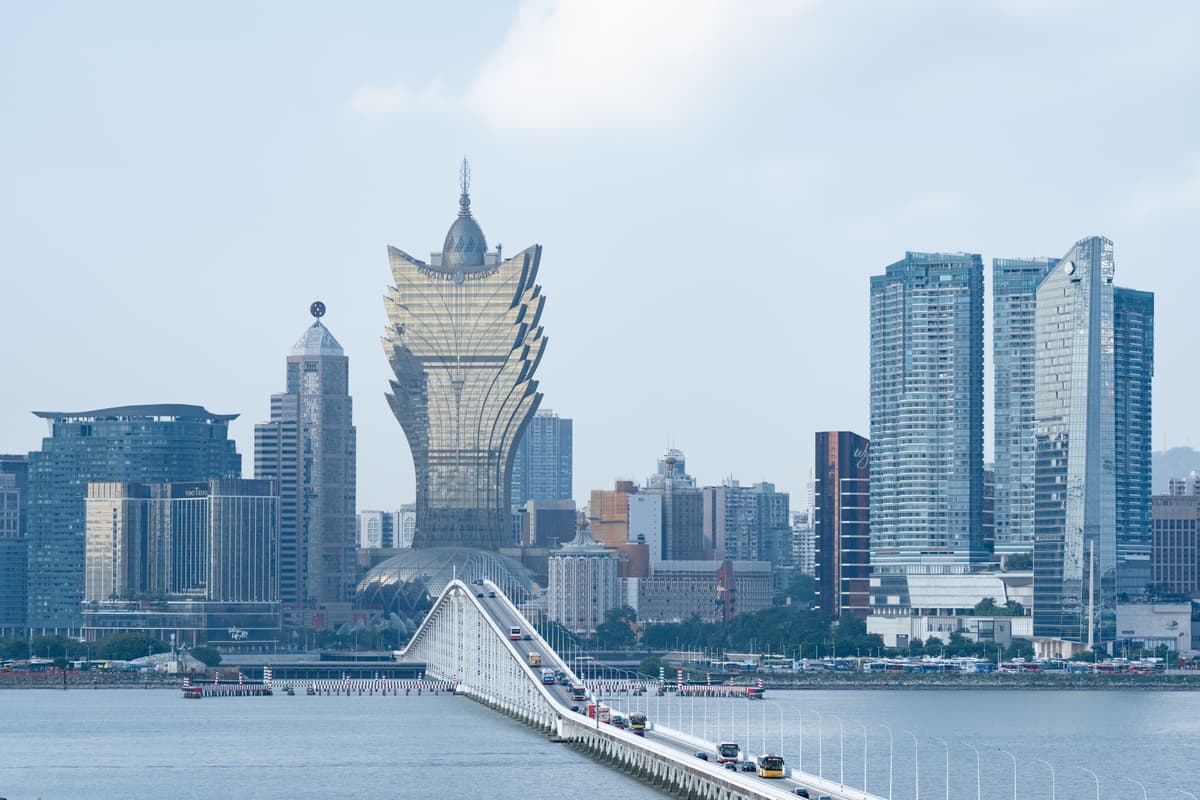
Hiring in Macau gives American companies access to a compact, prosperous, and highly internationalized labor market built around gaming, hospitality, finance, and professional services. The territory pairs one of the world's highest GDP-per-capita figures with a famously light tax burden, which makes it appealing to both employers managing costs and skilled professionals seeking strong take-home pay. Employers should understand that employment law in Macau is governed primarily by the Labour Relations Law, which sets minimum standards that a contract can never undercut. This guide walks you through the minimum wage in Macau, contracts, payroll, taxes, benefits, working hours, leave, hiring steps, work permits, and termination so you can hire compliantly.
Key Facts About Employment in Macau
Information Category | Details |
Minimum Wage in Macau | MOP 7,280 per month. |
Standard Workweek | 48 hours standard. |
Payroll Frequency | Monthly processing. |
Fiscal Year | Calendar year (January-December). |
Main Employment Laws | Labour Relations Law (Law No. 7/2008) Law on Employment of Non-Resident Workers (Law No. 21/2009). |
Employment Contracts in Macau
Macau recognizes three contract types, and choosing the correct one is the foundation of a compliant hire.
- An indefinite contract creates permanent employment and does not specify an end date.
- A fixed-term contract runs for a defined period and cannot exceed two years, after which it may be renewed no more than twice.
- A variable-term contract covers work whose duration is uncertain, and it is also capped at two years with the same renewal limits.
Contracts may be agreed verbally, but term contracts, contracts with foreign workers, and contracts with minors must be put in writing. A written contract must identify and be signed by both parties, set out the working conditions, and record both the date it is concluded and the date it takes effect, and each side should keep a copy. The probation period depends on the contract: it lasts 90 days for indefinite contracts, 30 days for fixed-term contracts, and up to 180 days for leadership roles or positions that demand high technical qualifications. Employers should also confirm that the agreement clearly states the job title, salary, working hours, and notice period, because any term less favorable to the employee than the law allows is automatically void and replaced by the statutory standard.
Payroll, Taxes, and Social Security in Macau
Salaries tax is levied on income earned by individuals working in the Macao SAR, whether monetary or in kind, fixed or variable, and regardless of source, location, payment method, or currency. Employers withhold tax (the local salaries tax) and remit it to the Financial Services Bureau quarterly in January, April, July, and October. The tables below separate the employer's obligations from the employee's.
Employer Contributions
Contribution Type | Rate |
Social Security Fund (resident employee) | The employer pays MOP 60 per month for each full-time local employee, settled quarterly. |
Non-resident worker levy | The employer pays a monthly levy of MOP 200 for each non-resident (foreign) worker employed. |
Employee Contributions
Contribution Type | Rate |
Social Security Fund | The employee contributes MOP 30 per month, which is deducted from salary. |
Income Tax Bracket
Annual Assessable Income (MOP) | Tax Rate |
0 – 144,000 | 0% |
144,001 – 164,000 | 7% |
164,001 – 184,000 | 8% |
184,001 – 224,000 | 9% |
224,001 – 304,000 | 10% |
304,001 – 424,000 | 11% |
Above 424,000 | 12% |
Compensation & Benefits in Macau
The table below outlines the benefits commonly provided in the market.
Benefit Type | Details |
Health insurance | Private medical coverage is not legally mandated, but many employers offer it to attract and retain staff in a competitive hiring market. |
Allowances | Food, housing, transport, and family allowances are widely used, and several of these are treated as part of remuneration for wage and tax purposes. |
Bonuses | Performance and attendance bonuses are common, particularly in the gaming and hospitality sectors. |
13th-month pay | A thirteenth-month payment is customary rather than legally required, and when it is paid, it is excluded from the minimum wage calculation. |
Working Hours and Overtime in Macau
The table summarizes the limits on hours and the rules that govern extra work.
Item | Rule |
Daily and weekly limits | Employees may work up to eight hours per day and 48 hours per week across six days. |
Rest breaks | Employees must receive at least 30 consecutive minutes of rest so they do not work more than five hours straight, plus 24 uninterrupted hours of rest each week. |
Overtime compensation | Overtime is generally paid at 120% of the normal rate, and many employers pay 150%, while work imposed without the employee's prior consent carries an additional 50%. |
Night work | Work performed between midnight and 6 a.m. attracts a 20% premium unless the employee was hired specifically for night shifts. |
Flexible and remote work | Macau law does not prescribe a remote-work framework, so flexible arrangements are negotiated between employer and employee and recorded in the contract. |
Leave and Statutory Time Off in Macau
The following table lists the statutory leave that Macau employers must provide.
Leave type | Details |
Paid annual leave | Employees earn a minimum of six paid working days, available from their second year of service, with proportional leave for those who have worked more than three months. |
Sick leave | Employees who have finished probation receive six days of paid sick leave each year. |
Maternity leave | Female employees with one year of service are entitled to 70 days, of which the employer pays 56 days and the Social Security Fund covers 14 days. |
Paternity leave | Fathers with one year of service receive five paid days, taken within 30 days of the birth. |
Marriage leave | Employees are granted six paid days for their own marriage. |
Bereavement leave | Employees receive three paid days following the death of a direct relative, which may extend to 12 days in defined circumstances. |
Macau observes a broad set of public holidays, and the obligatory ones under the Labor Relations Law are marked with an asterisk. Employers should plan staffing and payroll around the full list below.
- New Year's Day
- Lunar New Year's Day
- The second day of the Lunar New Year
- The third day of the Lunar New Year
- Good Friday falls on Friday
- The Day before Easter
- The Cheng Ming Festival
- Labor Day
- The Buddha's Birthday
- The Tung Ng (Dragon Boat) Festival
- The day following the Mid-Autumn Festival
- National Day of the People's Republic of China
- The day following National Day
- The Chong Yeung Festival
- All Souls' Day
- The Feast of the Immaculate Conception
- Macao S.A.R. Establishment Day
- The Winter Solstice
- Christmas Eve
- Christmas Day
Hiring and Onboarding Process in Macau
- Employers should first decide between incorporating a Macau entity and engaging an Employer of Record (EOR), since running compliant local payroll, social security, and tax withholding requires a registered local presence.
- The employer must issue a written employment contract that meets the Labour Relations Law and clearly states salary, job title, hours, probation, and notice.
- The employer must enroll the new hire in the Social Security Fund and begin the monthly MOP 60 employer contribution alongside the MOP 30 employee deduction.
- The employer must register the employee with the Financial Services Bureau using the M/2 form so that professional tax can be withheld, and must file the M/2A form if the employment later ends.
- For a smooth onboarding, the employer should confirm the candidate's Macau Resident Identity Card, set up payslip records, and brief the employee on benefits, leave, and pay dates from day one.
Termination & Notice Periods in Macau
The Labour Relations Law sets clear rules that employers must follow when ending an employment relationship.
- An employer must give at least 15 days' advance notice to end a contract without cause, while an employee resigning must give seven days, unless the contract specifies a longer period.
- An employer may dismiss without notice only for just cause, which includes serious misconduct or repeated breaches of duty.
- An employer who terminates without just cause must pay statutory severance, calculated according to the employee's length of service.
Length of Service | Compensation |
After probation up to 1 year | 7 days’ wages |
1–3 years | 10 days’ wages per year |
3–5 years | 13 days’ wages per year |
5–7 years | 15 days’ wages per year |
7–8 years | 16 days’ wages per year |
8–9 years | 17 days’ wages per year |
9–10 years | 18 days’ wages per year |
Over 10 years | 20 days’ wages per year |
- Redundancy is not treated as just cause, so a redundant employee is entitled to the same compensation as a dismissal without cause.
Useful Resources
Check out Niural Global Payroll
Other articles
Hiring in China
Hiring in Hong Kong
Disclaimer: This article is provided for informational purposes only and should not be relied on as legal advice or used as a substitute for advice from qualified legal counsel.