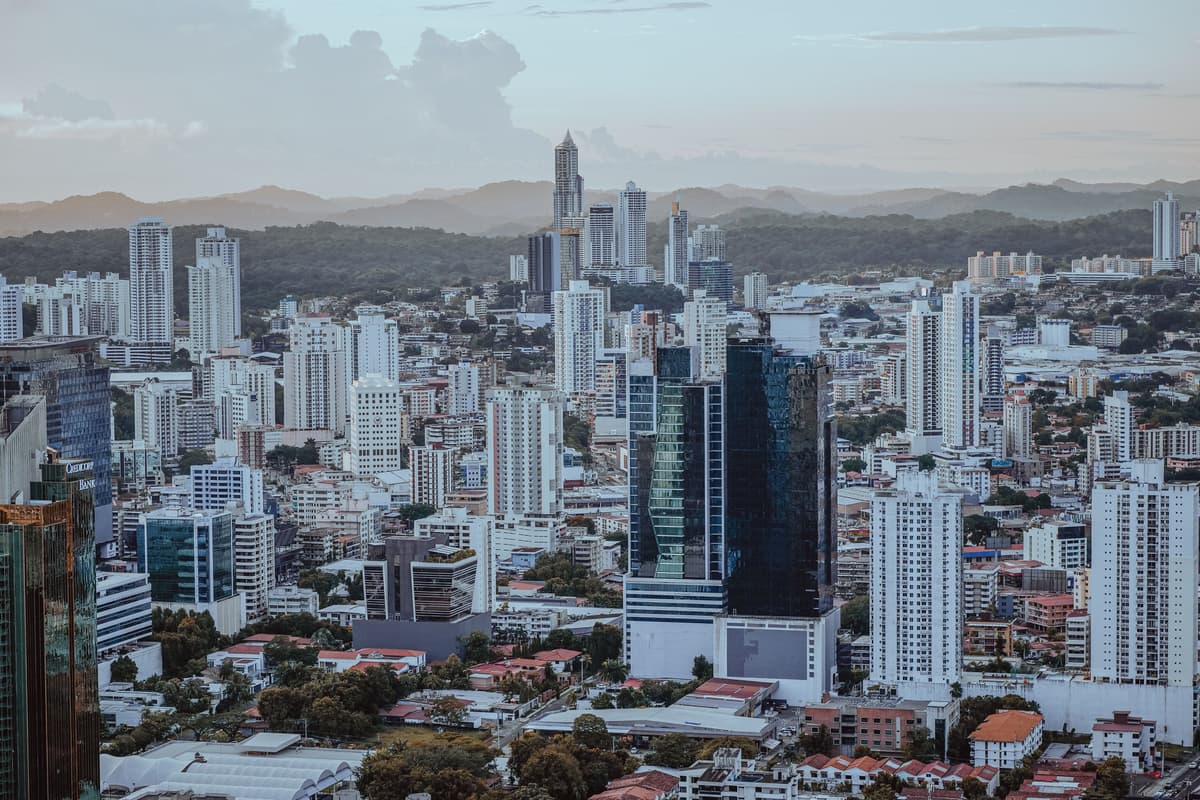
Panama sits at the commercial crossroads of the Americas, and its business culture is shaped by the Panama Canal, international banking, and logistics. Many professionals are bilingual and accustomed to working with North American firms, which shortens the cultural learning curve. At the same time, hiring in Panama is governed by a protective labor code, so employers must respect written-contract rules, social security obligations, and the tiered minimum wage. This guide explains the essentials for employers, covering employment law in Panama, payroll, statutory leave, termination, and how to onboard a new hire compliantly.
Key Facts About Employment in Panama
Information Category | Details |
Minimum Wage in Panama | Not a single national number; instead, it is set by region. |
Standard Workweek | 48 hours standard. |
Payroll Frequency | At least every 15 days/fortnight; weekly schedules may also be used. |
Fiscal Year | Calendar year (January-December). |
Main Employment Laws | Código de Trabajo. |
Employment Contracts in Panama
Panamanian law requires that every employment relationship be documented in a written contract drafted in Spanish, and that contract must be filed with MITRADEL. Employers should understand the three contract types the labor code recognizes.
- An indefinite-term contract is the default arrangement, and it offers the employee the strongest job stability along with standard notice and severance protections.
- A fixed-term contract is permitted for a defined period of up to one year, and it may run for up to three years when the role requires specialized or technical skills.
- A project-based contract covers a specific task or service, and it ends automatically when that defined work is completed.
Whichever type you choose, the written contract must clearly state certain mandatory details so that it is enforceable. These details include the full legal names of both parties, the job title and a description of duties, the agreed salary and the payment frequency, the place of work, and the working hours. The contract should also specify any probationary period, which is capped at three months, and during which either party may end the relationship without severance. Finally, employers are wise to address confidentiality and intellectual property, both of which are generally enforceable in Panama, before the contract is signed and filed.
Payroll, Taxes, and Social Security in Panama
Payroll in Panama centers on two payroll-tax systems, the CSS and the educational insurance fund, plus income tax that the employer withholds at source. Because Panama operates a territorial tax system, only Panama-sourced income is taxable. The tables below separate the employee's deductions from the employer's costs.
Employer Contributions
Contribution Type | Rate | Description |
Social security (CSS) | 13.25% | Under Law 462 of 2025, this rate remains at 13.25% through February 2027, then rises to 14.25% in March 2027 and reaches 15.25% by March 2029. |
Educational insurance | 1.50% | The employer matches the education fund at a slightly higher rate than the employee. |
Professional risk insurance | Variable | This premium covers workplace accidents, and the percentage depends on the industry's risk classification assigned by the CSS. |
Employee Contributions
Contribution Type | Rate | Description |
Social security (CSS) | 9.75% | This contribution funds the employee's pension, healthcare, and maternity coverage, and it is withheld from each paycheck. |
Educational insurance | 1.25% | This smaller deduction supports the national education fund and is taken from the ordinary salary. |
Income Tax Brackets
Annual taxable income (PAB) | Tax rate |
Up to B/.11,000 | 0% |
Over B/.11,000 up to B/.50,000 | 15% on the excess over B/.11,000 |
Over B/.50,000 | B/.5,850 on the first B/.50,000, plus 25% on the excess over B/.50,000 |
As a unique insight for employers recruiting senior talent, Panama also offers special schemes such as the Multinational Headquarters (SEM) regime, which can grant favorable tax and immigration treatment to qualifying foreign executives relocated to the country.
Compensation & Benefits in Panama
Beyond base pay, several benefits are mandatory in Panama, and employers should budget for them from the first pay cycle. The table below summarizes the most important elements of a compliant compensation package.
Benefit Type | Details |
13th-month salary (décimo) | Every employee is entitled to a thirteenth-month bonus equal to one month's pay, and it is delivered in three installments on April 15, August 15, and December 15. |
Health coverage | Mandatory healthcare is provided through the CSS, although many employers add private health insurance to attract and retain skilled staff. |
Allowances and bonuses | Allowances for transport or meals and performance bonuses are not legally required, but they are common tools that employers use to remain competitive. |
Seniority premium | At termination of any indefinite-term contract, regardless of cause, the employee is entitled to a seniority premium equal to one week of salary for each year of service, calculated using the statutory salary basis. |
Working Hours and Overtime in Panama
Working time in Panama is regulated closely, and employers must track hours carefully to avoid penalties. The table below outlines the core rules.
Item | Rule |
Daytime workweek | The standard daytime schedule is 8 hours per day and 48 hours per week. |
Night and mixed shifts | Night work is limited to 7 hours per day and 42 hours per week, while mixed shifts run up to 7.5 hours per day and 45 hours per week. |
Overtime limits | Overtime cannot exceed 3 hours in a single day or 9 hours in a single week. |
Overtime pay | Overtime is paid at a 25% premium for daytime overtime; 50% for nighttime overtime or overtime extending a mixed shift that began during the daytime period; and 75% for overtime extending a night shift or a mixed shift that began at night. |
Remote and flexible work | Remote and flexible arrangements are increasingly common and legally permitted, provided the contract documents the schedule and the employee's statutory protections remain intact. |
Leave and Statutory Time Off in Panama
Panama provides generous statutory leave, and the entitlements below should be reflected in every contract.
Leave type | Details |
Paid annual leave | Employees earn 30 calendar days of paid vacation after completing 11 months of continuous service, and the time must actually be taken rather than paid out. |
Sick leave | For non-occupational illness or accident, employees accrue paid incapacity leave at 12 hours for every 26 workdays served, up to 144 hours per year, with accumulation and CSS-related rules under the labor code. |
Maternity leave | Pregnant employees are entitled to 14 weeks of paid maternity leave, normally six weeks before and eight weeks after birth. Where CSS pays a maternity subsidy, the employer must cover any difference between the subsidy and the remuneration owed. |
Paternity leave | Fathers are entitled to 3 days of paid paternity leave at the time of the child's birth, and the employer pays this leave in full. |
The full list of national public holidays in Panama is as follows.
- New Year's Day
- Martyrs' Day, also called National Sovereignty Day
- Carnival Tuesday (February 17), with Carnival Monday on February 16 widely observed in practice
- Good Friday
- Labor Day
- Separation of Panama from Colombia
- Flag Day
- Consolidation of the Separation in Colón
- First Cry for Independence in Los Santos
- Independence Day
- Mother's Day
- National Mourning Day, which falls on a Sunday in 2026 and is therefore observed on Monday
- Christmas Day
Hiring and Onboarding Process in Panama
- Choose your hiring model first, since you must either incorporate a Panamanian entity or engage an Employer of Record (EOR) that becomes the legal employer on your behalf while you direct the work.
- Register as an employer before the first hire by obtaining a tax identification number (RUC) from the Dirección General de Ingresos, opening an employer account with the CSS, and registering with MITRADEL.
- Prepare a written employment contract in Spanish that includes all mandatory terms, and file it with MITRADEL on or immediately before the employee's start date.
- Enroll the new employee with the CSS before their first working day, because the law requires registration within the first days of employment.
- Set up payroll deductions, thirteenth-month accruals, and seniority-fund contributions from the very first pay cycle, and provide the mandatory health and safety orientation.
Termination & Notice Periods in Panama
Ending an employment relationship in Panama is heavily regulated, and missteps can lead to labor-court claims, so the points below should guide every separation.
- Notice requirements depend on cause and tenure, and an employer dismissing a worker without just cause must generally provide written notice at least 30 days in advance or pay the equivalent salary in lieu of that notice.
Situation | Notice period |
Employee resignation | 15 days |
Technical/specialized employee resignation | 2 months |
Employer termination (just cause) | None |
Employer termination (no just cause) | ~30 days or pay in lieu (common practice) |
Probation period | Usually no notice |
- Valid reasons for dismissal with just cause are defined narrowly in the labor code and include serious misconduct, repeated unjustified absences, dishonesty, and material breaches of the contract.
- Severance pay for a qualifying unjustified dismissal of an indefinite-term employee is generally 3.4 weeks of salary per year for the first 10 years and one week per year after that, with proportional payment for incomplete years.
Final pay must include any accrued but unused vacation and the pro-rated thirteenth-month bonus, and it should be settled by the next regular payday or within seven days of resignation.
Certain employees, including pregnant workers and union representatives, enjoy special protection and generally cannot be dismissed without prior authorization.
Useful Resources
Check out Niural Global Payroll
Other articles
Hiring in Costa Rica
Hiring in Colombia
Disclaimer: This article is provided for informational purposes only and should not be relied on as legal advice or used as a substitute for advice from qualified legal counsel.