
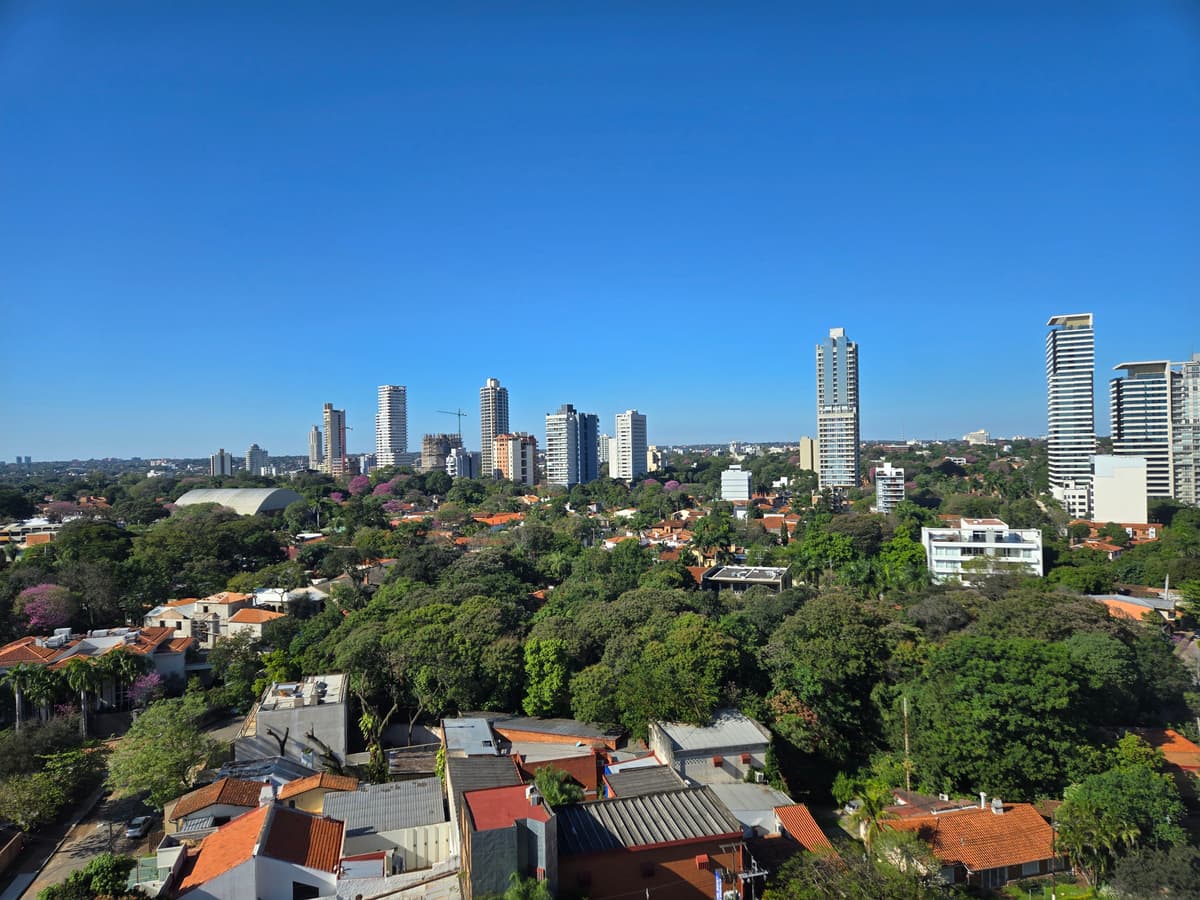
Paraguay pairs a young, motivated, and Spanish-speaking workforce with one of the most business-friendly tax systems in Latin America, anchored by a territorial regime and a flat 10% corporate rate. The work culture tends to value loyalty, personal relationships, and stability, which often translates into long employee tenures once trust is established. At the same time, employers must respect a protective labor code, mandatory social security enrollment, and a regulated minimum wage in Paraguay that is updated by government decree. This guide previews everything an employer needs, from contracts and payroll to leave, onboarding, and termination, so you can build a compliant team with confidence.
Key Facts About Employment in Paraguay
Information Category | Details |
Minimum Wage in Paraguay | PYG 2,899,408 per month. |
Standard Workweek | 48 hours standard. |
Payroll Frequency | Monthly processing. |
Fiscal Year | Calendar year (January-December). |
Main Employment Laws | Código del Trabajo, Law No. 213/1993. |
Employment Contracts in Paraguay
Paraguayan labor law recognizes several contract types, and choosing the right one protects both parties. While verbal agreements are technically valid, a written contract is strongly recommended and is effectively required to enforce fixed terms.
- Permanent (indefinite-term) contracts are the most common arrangement and carry no fixed end date. They offer the strongest job security for employees and are the default expectation for ongoing roles.
- Fixed-term contracts are tied to a defined period and are appropriate when the work has a clear endpoint. Paraguayan courts scrutinize repeated renewals, and a fixed-term contract that is continually extended can be reclassified as permanent.
- Temporary or project-based contracts cover seasonal demand or a specific, finite task, ending when the work is completed.
Regardless of type, a compliant employment contract should clearly state several mandatory details. These include the full identities of the employer and employee, the job title and a description of duties, the agreed salary and payment frequency, and the place of work. The contract should also specify the start date and, where relevant, the duration, along with working hours, the probationary period, and the applicable notice period. Probation typically lasts up to 30 days for general roles and may extend to 60 days for technical or specialized positions, during which either party may end the relationship with reduced formality. Spelling out these terms upfront reduces disputes and demonstrates good faith to Paraguay's labor authorities.
Payroll, Taxes, and Social Security in Paraguay
Running payroll in Paraguay means coordinating with two main agencies: the IPS for social security and the national tax authority (DNIT, which now houses the former SET tax functions) for income tax. The tables below separate the employer and employee sides so you can model the true cost of a hire.
Employer Contributions
Contribution Type | Rate |
IPS social security (employer) | 16.5% of gross salary |
Labor accident/risk insurance | Approximately 1%–2%, depending on activity |
Employee Contributions
Contribution Type | Rate |
IPS social security (employee) | 9% of gross salary, withheld by the employer |
Income Tax Brackets
Annual Net Income (PYG) | Rate |
Up to 50,000,000 | 8% |
50,000,001 to 150,000,000 | 9% |
Above 150,000,000 | 10% |
Note: Individuals with a gross income of less than PYG 80,000,000 are generally exempt from filing and paying personal income tax.
Paraguay applies a territorial tax system, meaning only income earned from sources within the country is generally taxable. This is the closest thing to a built-in incentive for international talent: foreign-source income earned by residents typically falls outside Paraguayan income tax, which makes the country attractive for remote and cross-border professionals. Employers are responsible for calculating, withholding, and remitting both IPS contributions and any IRP due each month, and accurate, on-time filings are essential to avoid penalties.
Compensation & Benefits in Paraguay
Beyond base pay, Paraguayan law guarantees a set of benefits, and competitive employers usually add more to attract talent. The table below summarizes the core elements.
Benefit Type | Details |
Health insurance | Mandatory enrollment in IPS provides healthcare and pension coverage; many firms add private medical top-ups. |
Aguinaldo (13th salary) | A mandatory annual bonus equal to one-twelfth of total earnings, paid by the end of December. |
Family allowance (bonificación familiar) | A supplement of 5% of the minimum wage per dependent child for eligible employees. |
Common allowances and bonuses | Transport and meal allowances, plus performance or retention bonuses, are widely used to stay competitive. |
There is no separate 14th-salary requirement in Paraguay, so the aguinaldo is the key statutory annual payment to budget for. Offering supplemental health insurance and meal or transport support is a practical way for US employers to stand out in a market where these perks signal stability and investment in the team.
Working Hours and Overtime in Paraguay
The labor code sets clear ceilings on working time, with shorter limits for night and mixed shifts. The table outlines the standard limits and how overtime is compensated.
Category | Daily limit | Weekly limit |
Daytime work | 8 hours | 48 hours |
Night work | 7 hours | 42 hours |
Mixed shifts | 7.5 hours | 45 hours |
Overtime is permitted within limits and must be paid at a premium. Daytime overtime carries a surcharge of at least 50% over the normal hourly rate, while work performed at night, on Sundays, or on public holidays attracts a 100% surcharge. Overtime is generally capped at three hours per day, and a weekly rest period on Sunday is mandatory.
Remote and flexible work are increasingly common and are recognized under Paraguay's teleworking framework, so employers building distributed teams should document remote arrangements clearly, including equipment, expenses, and working hours, within the employment contract.
Leave and Statutory Time Off in Paraguay
Paraguayan employees accrue paid leave that grows with tenure, alongside several other protected absences. The table summarizes the main entitlements.
Leave type | Details |
Annual paid leave (1–5 years of service) | 12 working days |
Annual paid leave (5–10 years of service) | 18 working days |
Annual paid leave (over 10 years of service) | 30 working days |
Maternity leave | 18 weeks, paid through IPS at full salary |
Paternity leave | 2 weeks (14 days), paid by the employer |
Sick leave | Up to 26 weeks, with IPS covering 50% of salary after the qualifying contribution period |
Bereavement leave | 3 days for the death of a close family member |
Marriage leave | 3 days |
Maternity leave may be extended in cases of multiple births or pregnancy complications, with an additional period granted per the relevant rules. Sick leave eligibility depends on having made the minimum required IPS contributions, and a valid medical certificate is needed to claim paid time off.
Public holidays are counted separately from annual leave, so employees enjoy paid days off on national holidays in addition to their vacation entitlement. Here is the full list of public holidays in Paraguay:
- New Year's Day
- Heroes' Day
- Holy Thursday
- Good Friday
- Labor Day
- Independence Day
- Independence Day and Mother's Day
- Chaco Armistice Day / Day of Peace
- Day of the Oath of the National Constitution
- Founding of Asunción
- Battle of Boquerón / Victory of Boquerón
- Day of the Virgin of Caacupé
- Christmas Day
Note that several of these are movable holidays that the Executive can shift to a Monday to create long weekends, and the President may decree up to three additional holidays during the year.
Hiring and Onboarding Process in Paraguay
A US employer hiring a Paraguayan national has three practical routes, and the right choice depends on your long-term plans in the country.
- You can set up a local legal entity, which gives you full control but requires the most time, capital, and ongoing administration.
- You can engage the worker as an independent contractor, which is faster but risky for ongoing, full-time roles, since misclassification can trigger penalties and reclassification as an employee.
- You can use an Employer of Record (EOR), which lets you hire compliantly without forming an entity, as the EOR becomes the legal employer and handles payroll, IPS, and tax filings.
To employ someone directly, you must obtain a RUC (taxpayer ID) from the tax authority and register as an employer with the IPS before running your first payroll, then enroll the new hire in the IPS. Core onboarding documents include the employee's national ID (cédula), their bank details for salary transfers, the signed written contract, and IPS enrollment forms. For a strong start, prepare the contract and benefits in writing, confirm the probationary terms, and walk the employee through their payslip structure. Because you are hiring a Paraguayan national, work permits in Paraguay are not required; permits and immigration steps only come into play when you hire foreign nationals to work inside the country.
Termination & Notice Periods in Paraguay
Ending employment in Paraguay is regulated, and following the correct process protects you from costly claims.
- Notice (preaviso) scales with tenure and is generally 30 days for under one year of service, 45 days for one to five years, 60 days for five to ten years, and 90 days for more than ten years; payment in lieu of notice is allowed.
- Valid reasons for dismissal include just cause (such as serious misconduct), dismissal without cause accompanied by severance, mutual agreement, employee resignation, and the natural expiry of a fixed-term contract.
- Severance pay for dismissal without just cause is calculated at 15 days' wages for each year of service (or a proportional fraction beyond six months).
- Employees with ten or more years of service enjoy enhanced protection and can generally only be dismissed for proven just cause; an unjustified dismissal in this case can lead to roughly double the standard compensation.
Check out Niural Global Payroll
Other articles
Hiring in Argentina
Hiring in Bolivia
Disclaimer: This article is provided for informational purposes only and should not be relied on as legal advice or used as a substitute for advice from qualified legal counsel.