
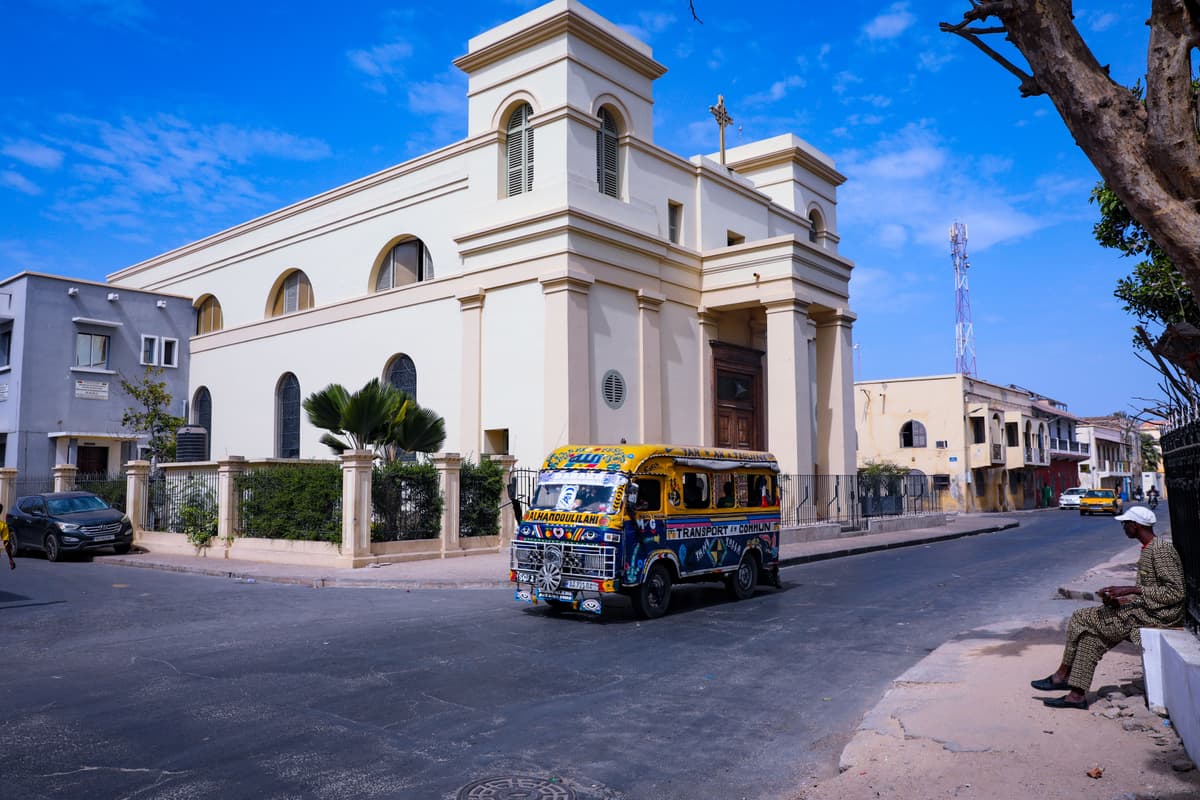
Senegal anchors a stable, French-speaking economy with a young, multilingual workforce and growing strength in services, finance, telecommunications, and energy. The work culture tends to blend formal hierarchy with strong relationship-building, so trust and clear communication matter. Before you make an offer, it helps to understand the minimum wage in Senegal, social security obligations, and the protective nature of local labor rules. This guide walks through key facts, contracts, payroll in Senegal, benefits, working hours, leave, the hiring process, and termination so you can hire confidently and compliantly.
Key Facts About Employment in Senegal
Information Category | Details |
Minimum Wage in Senegal | 371.04 CFA francs per hour for non-agricultural work. |
Standard Workweek | 40 hours standard. |
Payroll Frequency | Monthly processing. |
Fiscal Year | Calendar year (January-December). |
Main Employment Laws | Labour Code (Law No. 97-17). |
Employment Contracts in Senegal
Employment law in Senegal recognizes a few distinct contract types, and choosing the right one is the foundation of a compliant hire.
- The indefinite-term contract (Contrat à Durée Indéterminée, or CDI) is the default and most common arrangement, offering open-ended employment and the strongest protection against dismissal.
- The fixed-term contract (Contrat à Durée Déterminée, or CDD) is reserved for temporary needs such as covering an absence, handling a surge in workload, or completing a defined project. It is capped at two years and may be renewed only once; misusing it for a permanent role can lead a court to reclassify it as a CDI.
- Temporary or interim contracts, typically arranged through a staffing agency, cover short-term assignments.
Every written contract should clearly set out the core terms so both sides know where they stand. A complete contract covers the job title and duties, the salary and any allowances, the place of work, the contract type and duration, the probationary period, the notice period, and references to the applicable collective agreement. A probation clause is optional in a CDI, but where one applies, it usually runs for one month for non-executives and up to three months for executives and engineers, renewable once with the employee's written consent.
Payroll, Taxes, and Social Security in Senegal
Running payroll in Senegal means layering mandatory social contributions and withheld income tax on top of gross pay. Employers carry most of the social charges, while income tax is deducted at source. The two tables below separate the employer's costs from the employee's deductions. Contribution ceilings apply to several schemes, and rates can vary by sector and risk class.
Employer Contributions
Contribution Type | Rate | Notes |
IPRES pension (general scheme) | 8.4% | Capped at roughly 3× SMIG (about 191,130 CFA/month) |
IPRES pension (executive scheme) | 3.6% | Applies to the salary band above the general ceiling |
CSS family benefits | 7% | Calculated on a capped salary base |
CSS work-injury insurance | 1%–5% | Rate depends on the sector's risk classification |
Health coverage (IPM) | ~3% | Arranged at company level; varies by agreement |
Employer training contribution (CFCE) | 3% | Levied on total payroll |
Employee Contributions
Contribution Type | Rate | Notes |
IPRES pension (general scheme) | 5.6% | Subject to the same ceiling as the employer share |
IPRES pension (executive scheme) | 2.4% | On the salary band above the general ceiling |
Health coverage (IPM) | ~3% | Company-level medical scheme |
Income Tax Brackets
Annual Taxable Income (CFA Francs) | Tax Rate |
0 – 630,000 | 0% |
630,001 – 1,500,000 | 20% |
1,500,001 – 4,000,000 | 30% |
4,000,001 – 8,000,000 | 35% |
8,000,001 – 13,500,000 | 37% |
13,500,001 – 50,000,000 | 40% |
Over 50,000,000 | 43% |
Compensation & Benefits in Senegal
A competitive offer in Senegal usually goes well beyond the legal minimum, especially in Dakar and in skilled professions where market rates run higher. The table below outlines the minimum wage in Senegal alongside the benefits employers commonly provide.
Benefit Type | Details |
Health insurance | Mandatory medical coverage through an IPM, often supplemented by private insurance |
Allowances | Transport, housing, meals, and utility allowances are widely offered |
Bonuses | Performance and seniority bonuses; a seniority bonus is commonly expected |
13th/14th salary | Not legally required, though a 13th-month payment is sometimes offered as a discretionary benefit |
Working Hours and Overtime in Senegal
The labor code sets a clear ceiling on regular hours, with premium pay required once those limits are exceeded. Overtime is capped at 100 hours per year, and labor inspectors increasingly scrutinize how night and holiday hours are classified on payslips.
Item | Rule |
Weekly rest | At least 24 consecutive hours |
Overtime, hours 41–48 | Paid at a premium of roughly 15% above the normal rate |
Overtime beyond 48 hours | Paid at a premium of roughly 40% |
Night, rest-day, or holiday work (daytime) | Premium of around 60% |
Leave and Statutory Time Off in Senegal
Senegal provides a solid floor of paid time off, and collective agreements or seniority often improve on the statutory minimums. The table summarizes the main entitlements.
Leave type | Details |
Paid annual leave | At least two working days per month of service, amounting to roughly 24 days for a full year, with more common through seniority and collective agreements |
Sick leave | Paid leave on presentation of a medical certificate (generally within 48 hours), with duration and pay scaling by length of service under the inter-professional agreement |
Maternity leave | 14 weeks at full pay, funded through social security, typically six weeks before and eight weeks after the birth |
Paternity leave | Generally, one paid day under the inter-professional collective agreement |
A full year of work entitles most employees to their accrued leave, and unused leave is generally payable when employment ends. The public holidays observed in Senegal include the following, with several religious dates set by moon-sighting and therefore subject to confirmation:
- New Year's Day
- Korité / Eid al-Fitr
- Independence Day
- Easter Monday
- Labor Day
- Ascension Day
- Whit Monday / Pentecost Monday
- Tabaski / Eid al-Adha
- Tamkharit / Islamic New Year
- Grand Magal of Touba
- Assumption of Mary
- Maouloud / Prophet's Birthday
- All Saints' Day
- Christmas Day
Hiring and Onboarding Process in Senegal
- Choose your hiring model: establish a local entity (registering with the RCCM commercial registry, obtaining a NINEA tax identification number, and filing through the CFE one-stop business window), engage the worker as an independent contractor, or partner with an Employer of Record (EOR) that acts as the legal employer on your behalf.
- Register as an employer with IPRES (pensions), the CSS (family benefits and work-injury insurance), and the tax authority (DGID) so contributions and withholding can be remitted correctly.
- Draft a written contract in French covering pay, role, contract type, probation, and notice.
- Collect onboarding documents, including identification, proof of qualifications, bank details, and any required medical or background checks, and declare employee personal data to the CDP, Senegal's data-protection authority.
- Onboard with a clear first-week plan, a written role description, and an introduction to the team, since relationship-building strongly shapes retention.
Termination & Notice Periods in Senegal
Ending a CDI is more regulated than in the United States, so plan dismissals carefully and document the reasons in writing. Employees are protected against unfair dismissal, and procedural mistakes can lead to reinstatement or damages.
- Notice in writing is required and must state the reason for dismissal; common minimums run from one month for hourly, daily, or weekly-paid staff to two months for monthly-paid non-managers and three months for managers, subject to the applicable collective agreement.
- Valid grounds include misconduct, economic or organizational reasons, and personal reasons that meet the legal threshold; serious misconduct (faute grave) allows dismissal without notice or severance.
- Severance for a CDI dismissed without serious misconduct is calculated per year of service as a percentage of the average monthly salary, generally 25% for the first five years, 30% for years six through ten, and 40% beyond ten years; a CDD ended at term carries a 7% end-of-contract indemnity.
Check out Niural Global Payroll
Other articles
Hiring in Ghana
Hiring in Kenya
Disclaimer: This article is provided for informational purposes only and should not be relied on as legal advice or used as a substitute for advice from qualified legal counsel.