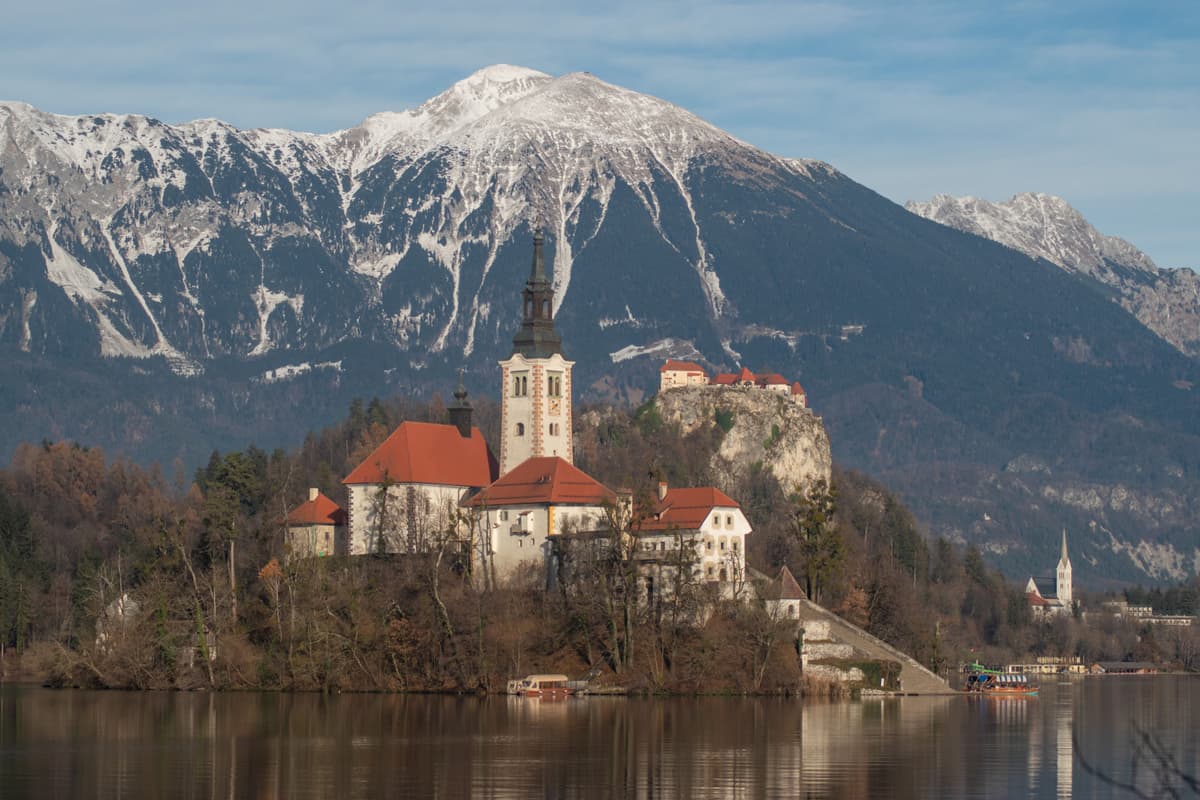
As a member of the European Union and the Eurozone, Slovenia offers a highly educated, multilingual workforce, a stable business environment, and a competitive cost structure compared to Western Europe. Its strategic location, bordering Italy, Austria, Hungary, and Croatia, makes hiring in Slovenia especially appealing for companies seeking a Central European hub.
Employers considering hiring in Slovenia must familiarize themselves with the country’s robust labor framework. Key legal considerations include the Employment Relationships Act (ZDR-1), the Minimum Wage Act, and recent 2026 reforms under ZUTD-I that introduce expanded unemployment benefits, a new 80/90/100 reduced-hours scheme for older workers, and higher hiring incentives. This guide covers employment contracts, payroll, taxes, statutory benefits, and leave entitlements, everything an American employer needs to hire compliantly.
Key Facts About Employment in Slovenia
Information Category | Details |
Minimum Wage in Slovenia | €1,481.88 gross per month. |
Standard Workweek | 40 hours standard. |
Payroll Frequency | Monthly processing. |
Fiscal Year | Calendar year (January-December). |
Main Employment Laws | Employment Relationships Act (ZDR-1) Minimum Wage Act (ZMinP) Pension and Disability Insurance Act (ZPIZ-2) Collective Agreements Act (ZKolP) |
Employment Contracts in Slovenia
Employment law in Slovenia requires that all employment relationships be formalized through a written contract before the employee begins work. Failure to provide a written contract in a timely manner exposes the employer to penalties. The ZDR-1 governs all contract types and sets minimum standards that cannot be contracted away, even with employee consent.
The following types of employment contracts are recognized under Slovenian law:
- Indefinite (permanent) contract: This is the default and most common form of employment in Slovenia. It has no end date and provides the strongest job security to employees. Employers must demonstrate a valid legal reason to terminate this type of contract.
- Fixed-term contract: This contract is allowed only for objectively justified reasons, such as temporary increases in workload, project-based work, or replacing an absent employee. Fixed-term contracts with the same employee generally may not exceed two consecutive years in total duration, including extensions.
- Part-time contract: Employees working fewer than 40 hours per week are entitled to proportionate rights, including wages, leave, and social security contributions.
- Telework/remote work contract: Slovenian law expressly allows homeworking arrangements; employers must specify the terms and provide a home-working allowance.
Every employment contract under Slovenian employment law must include the following mandatory elements:
- Job title and description: A clear statement of the role and responsibilities the employee is expected to perform.
- Location of work: The specific workplace address; if not stated, it defaults to the employer’s registered office.
- Start date and contract duration: For fixed-term contracts, the end date and the legal justification for using a fixed-term arrangement.
- Salary and payment schedule: The agreed gross salary, any applicable bonuses, and the monthly payment cycle.
- Working hours: Standard hours and whether the role is full-time or part-time.
- Probationary period: Up to a maximum of six months; both parties may terminate with 7 days’ notice during this period. Note: As of March 2026, the Slovenian Supreme Court (judgment VIII Ips 28/2025) confirmed that employers may not dismiss employees for business reasons during the probationary period.
- Notice period: Legally prescribed minimums based on length of service (see Termination section).
- Annual leave entitlement: A minimum of 20 working days per year.
- Reference to applicable collective agreement: If a sector-level or company-level collective agreement applies, it must be referenced.
Payroll, Taxes, and Social Security in Slovenia
Running payroll in Slovenia requires employers to manage monthly social security contributions, personal income tax (PIT) withholding, and timely electronic filings with the Financial Administration of the Republic of Slovenia (FURS). Both employers and employees make mandatory contributions that fund pension, health, unemployment, and parental insurance schemes.
Employer Contributions
Contribution Type | Rate |
Pension & Disability Insurance | 8.85% |
Health Insurance | 6.56% |
Unemployment Insurance | 0.06% |
Injury at Work Insurance | 0.53% |
Parental Care Insurance | 0.10% |
Total employer cost | 16.1% |
Employee Contributions
Contribution Type | Rate |
Pension & Disability Insurance | 15.50% |
Health Insurance | 6.36% |
Unemployment Insurance | 0.14% |
Parental Care Insurance | 0.10% |
Total employee deduction | 22.1% |
Income Tax Brackets
Annual Taxable Income | Tax Calculation |
Up to €9,210.26 | 16% |
€9,210.26 – €27,089.00 | €1,473.64 + 26% above €9,210.26 |
€27,089.00 – €54,178.00 | €6,122.11 + 33% above €27,089.00 |
€54,178.00 – €78,016.32 | €15,061.48 + 39% above €54,178.00 |
Over €78,016.32 | €24,358.43 + 50% above €78,016.32 |
Payroll taxes in Slovenia are generally reported and remitted monthly, with withheld income tax and social security contributions due by the 18th day of the month following salary payment. For 2025, resident employees generally benefit from a basic annual tax allowance of around €5,000, with an additional €1,300 relief available for employment income earned by individuals under age 29. Slovenia also introduced a new incentive effective in 2025: qualifying new tax residents under 40 may obtain a 7% reduction in income tax on salary income for up to five consecutive years, subject to residency history and minimum salary conditions.
Compensation & Benefits in Slovenia
Compensation in Slovenia extends well beyond the base salary. Employment law in Slovenia mandates several benefits that employers must provide regardless of industry or company size.
Benefit | Minimum Requirement (2026) | Notes |
Holiday Bonus (Regres) | At least minimum wage (€1,481.88) | Paid by July 1 each year; mandatory |
Meal Allowance | Up to €7.96 per working day | Tax-exempt up to the threshold |
Transport Allowance | Actual cost of commute | Reimbursed for travel to/from work |
Supplementary Health Insurance | ~€35–45/month | Widely offered by employers; covers copayments |
13th-Month Salary (Christmas Bonus) | Not legally mandated | Common practice; often paid in December |
Jubilee/Anniversary Bonus | Not legally mandated | Some collective agreements require it |
Working Hours and Overtime in Slovenia
Slovenian employment law establishes clear limits on daily and weekly working hours, with strict overtime compensation requirements. Employers are legally obligated to maintain accurate time-keeping records for every employee.
Category | Standard Rule | Maximum / Notes |
Daily Limit | 8 hours/day | Maximum 10 hours/day |
Meal Break | 30 minutes (if shift > 6 hours) | Included in 40-hour count |
Overtime Limit | 8 hrs/week; 20 hrs/month | Up to 170 hrs/year with written consent |
Overtime Premium | At least 30% above the regular rate | Applies to all overtime hours |
Sunday Work Premium | 50% above the regular rate | Mandatory supplement |
Public Holiday / Night Work Premium | 50–100% / 30–50% above regular rate | Night = 10 PM – 7 AM |
80/90/100 Reduced Hours (2026) | 80% hours, 90% salary | For employees aged 58+ or 35+ years of service |
A significant 2026 development is the 80/90/100 scheme introduced by ZUTD-I, allowing eligible older employees to reduce their working hours to 80% (approximately 32 hours/week) while receiving 90% of their salary, with pension contributions calculated as if they worked 100%.
Leave and Statutory Time Off in Slovenia
Slovenia provides employees with generous statutory leave entitlements. Employers must account for all of the following when planning staffing and budgets for hiring in Slovenia.
Leave Type | Entitlement | Details |
Paid Annual Leave | Minimum 20 working days (4 weeks) | At least 2 consecutive weeks must be taken in the same year |
Additional Annual Leave | 1 day for 3-5 years 2 days for 6-10 years 4 days for 11-15 years 5 days for 16-20 years 6 days for 21-25 years | |
Personal Leave | Up to 7 days/year (paid) | For marriage, bereavement, birth, and other personal events |
Sick Leave (first 30 days) | 80% of the average wage (paid by the employer) | Doctor’s certificate required |
Sick Leave (30+ days) | 80% of the average wage (paid by ZZZS) | Health Insurance Institute takes over after 30 days |
Maternity Leave | 105 days (100% of salary) | Starts 28 days before due date; paid by Health Insurance Institute |
Paternity Leave | 15 days (100% of base salary) | Paid by government; capped at 2.5x average monthly wage; flexible use until child turns 3 |
Parental Leave | 160 days per parent (320 days total) | Up to 100 days transferable between parents; extendable for multiple births |
Unlike many countries, Slovenia does not shift public holidays that fall on weekends to the following Monday, so employees simply lose those days. The following are the public holidays in Slovenia:
- New Year’s Day
- 2nd Day of New Year’s Day
- Pреšeren Day, Slovenian Cultural Holiday
- Easter Sunday
- Easter Monday
- Resistance Day (Dan upora proti okupatorju)
- Labor Day
- Labor Day 2 (May 2)
- Whit Sunday (Binkоšti)
- Statehood Day (Dan državnosti)
- Assumption Day (Marijino vnebovzetje)
- Reformation Day (Dan reformacije)
- All Saints’ Day (Dan spomina na mrtve)
- Christmas Day (Božič)
- Independence and Unity Day (Dan samostojnosti in enotnosti)
Hiring and Onboarding Process in Slovenia
For employers hiring Slovenian nationals, the process is relatively straightforward when compared to non-EU hiring, as no work authorization is required. However, there are specific registration steps that must be completed before the employee begins work. The following outlines the process for legally hiring a Slovenian national in 2026:
- Post the vacancy: Employers with open positions are encouraged (and in some cases required) to notify the Employment Service of Slovenia (ZRSZ) when advertising roles, particularly if seeking workers. Job advertisements must comply with anti-discrimination rules under the ZDR-1.
- Issue the employment contract: The written contract must be signed by both parties before the employee’s first day of work. The contract must contain all mandatory elements described in the Employment Contracts section.
- Register with social security: Before work begins, the employer must register the new employee with the Health Insurance Institute of Slovenia (ZZZS) and the Pension and Disability Insurance Institute (ZPIZ) through the M1 registration form submitted via the e-VEM portal or the SPOT system.
- Register with tax authorities: The employer must ensure the employee is registered with the Financial Administration of the Republic of Slovenia (FURS) for income tax withholding purposes.
- Occupational safety assessment: The employer must conduct a risk assessment under the Occupational Safety and Health Act and issue a written safety statement. Employees must receive safety training before starting work.
- Maintain time records: Slovenian employment law requires employers to keep a detailed working time record for every employee from day one.
For foreign nationals from non-EU/EEA countries, hiring in Slovenia requires obtaining a Single Work and Residence Permit (enotno dovoljenje za prebivanje in delo). The employer typically initiates this process, which involves a labor market test to confirm that no suitable local or EU candidate is available, followed by a joint application to the local Administrative Unit (Upravna enota) with the Employment Service of Slovenia providing consent. Processing times for work permits in Slovenia generally range from 1.5 to 3 months. EU/EEA nationals have free access to the Slovenian labor market but must register their residence if staying longer than 90 days.
Termination & Notice Periods in Slovenia
Termination in Slovenia is closely regulated by the ZDR-1, which distinguishes between ordinary termination (with notice) and extraordinary termination (without notice). Employers must follow strict procedural requirements to avoid claims of unlawful dismissal, including the possibility of court-ordered reinstatement.
- Valid grounds for ordinary termination: Business reasons (redundancy, restructuring), employee incapacity (inability to perform the role), and fault-based reasons (misconduct or breach of contractual obligations after a prior written warning). Before any termination, the employer must issue a written statement and give the employee a minimum of 3 working days to respond.
- Notice periods (ordinary termination, business or incapacity reasons):
Under 1 year of service: 15 days
1–2 years of service: 30 days
2–5 years of service: 30 days plus 2 days for every additional year of service, capped at 60 days.
5–15 years of service: 80 days
- Extraordinary (immediate) termination: Permitted only for serious breaches such as theft, workplace violence, deliberate disclosure of trade secrets, or absence for 5 or more consecutive days without reason. The employer must act within 30 days of becoming aware of the breach.
- Severance pay: Mandatory for all ordinary terminations initiated by the employer for business or incapacity reasons where the employee has at least 1 year of service. The formula is:
1/5 of the average monthly salary per year of service for the first 10 years
1/4 per year for years 10–20
1/3 per year for service exceeding 20 years.
Total severance is capped at 10 times the employee’s average monthly salary from the last three months, unless a collective agreement provides otherwise.
- No severance in certain cases: Severance is not owed if the employee resigns voluntarily, if termination is due to gross misconduct or fault, or if the employee has qualified for an old-age pension.
- Probationary period note: As of March 2026, employers may not terminate an employee for business reasons during the probationary period. Either party may terminate for probationary failure with 7 days’ notice.
Useful Resources
Check out Niural Global Payroll
Other articles
Hiring in Austria
Hiring in Hungary
Disclaimer: This article is provided for informational purposes only and should not be relied on as legal advice or used as a substitute for advice from qualified legal counsel.