
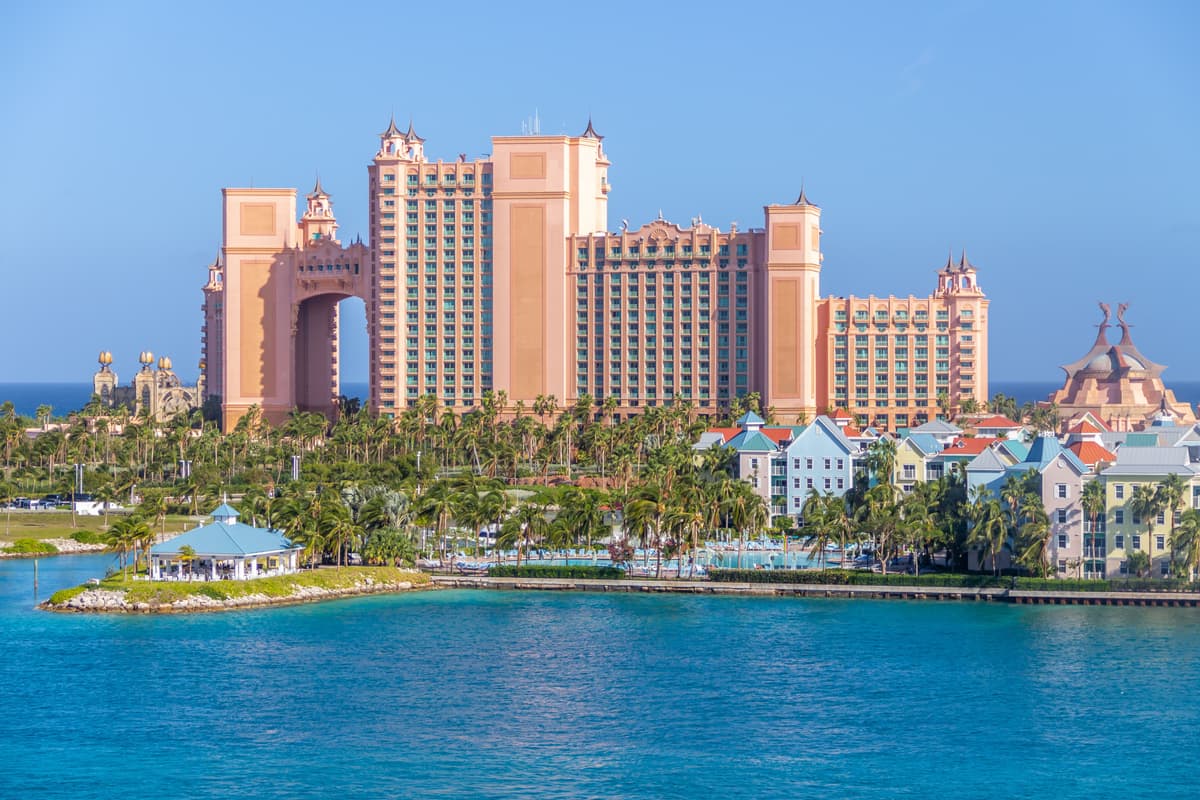
The Bahamas is one of the most strategically appealing destinations in the Atlantic for American employers looking to expand internationally. With its English-speaking workforce, a currency pegged one-to-one to the U.S. dollar, and a business-friendly economy driven largely by tourism and financial services, hiring in the Bahamas is a natural next step for many U.S. companies. That said, Bahamian employment law differs significantly from American norms. There is no at-will employment, and the Employment Act of 2001 establishes firm obligations around contracts, minimum wage, leave, and termination. This guide covers everything U.S. employers need to know about employment law, payroll, work permits, and the day-to-day realities of running a compliant operation in this island nation.
Key Facts About Employment in the Bahamas
Information Category | Details |
Minimum Wage in the Bahamas | BSD $260 per week. |
Standard Workweek | 40 hours standard. |
Payroll Frequency | At least once per month / at intervals of not more than one month. |
Fiscal Year | July 1 to June 30. |
Main Employment Laws | Employment Act 2001 Industrial Relations Act Health and Safety at Work Act Immigration Act |
Employment Contracts in the Bahamas
Employers operating in the Bahamas must provide every employee with a written statement of the terms and conditions of their employment. Contracts may be oral or written, but employers must inform employees as soon as practicable of key particulars such as employer name, employee identity, nature/duration of employment, wages, payment method/frequency, and work hours. A written contract is strongly recommended.
The following types of contracts are commonly used when hiring in the Bahamas:
- Permanent (Indefinite) Contracts: These contracts have no fixed end date and represent the standard ongoing employment relationship. They are most common in industries like banking and hospitality management.
- Fixed-Term Contracts: These specify a defined start and end date and are commonly used for project-based work, seasonal tourism roles, or temporary coverage needs. Employment ends automatically at the contract's conclusion unless renewed.
- Probationary Contracts: Employers may evaluate new hires during a probationary period, typically ranging from 3 to 6 months. Importantly, probationary employees are still entitled to minimum wage, overtime protections, and other statutory rights from day one.
Every employment contract in the Bahamas must include the following mandatory details:
- Full job title and description of duties
- Agreed salary and method of payment
- Standard working hours and days
- Probation period duration (if applicable)
- Notice period for termination by either party
- Leave entitlements (annual, sick, and maternity)
- Reference to the Employment Act 2001 and applicable collective agreements
Payroll, Taxes, and Social Security in the Bahamas
One of the most distinctive features of payroll in the Bahamas is the absence of personal income tax. The Bahamas imposes no income tax on employee wages, which simplifies payroll considerably compared to most jurisdictions. However, both employers and employees are required to make contributions to the National Insurance Board (NIB), which funds benefits including retirement pensions, sickness pay, maternity benefits, and industrial injury coverage.
Contribution Type | Employer Rate | Employee Rate |
|---|---|---|
NIB (National Insurance Board) | 6.65% | 4.65% |
Payroll Detail | Requirement |
|---|---|
Payroll Frequency | At least once per month |
Insurable Wage Ceiling | BSD $810 per week / BSD $3,510 per month |
NIB Remittance Deadline | By the 15th of the following month |
Currency of Payment | Bahamian Dollar (BSD) |
Pay Slip Requirement | An itemized pay slip must accompany each payment |
Payment Methods | Cash, cheque, or direct bank transfer (with employee consent) |
Compensation & Benefits in the Bahamas
The minimum wage in the Bahamas is currently set at BSD $260 per week, equivalent to BSD $6.50 per hour based on a 40-hour week. Employers must pay at least this amount to all eligible employees in the private sector. Beyond the statutory minimum, competitive compensation packages in the Bahamas commonly include the following:
Benefit | Details |
|---|---|
NIB Social Security | Mandatory enrollment covers sickness, maternity, retirement, and injury |
Private Health Insurance | Not legally mandated, but widely offered by employers as a competitive benefit |
Annual Bonus / Gratuity | Common in hospitality and finance sectors; not legally required |
13th Month Salary | No statutory requirement; offered at the employer's discretion |
Housing Allowance | Frequently offered to expatriate employees or senior hires |
Transportation Allowance | Common in tourist-heavy areas where commuting costs are high |
Life Insurance | Optional; offered as part of comprehensive benefits packages |
Working Hours and Overtime in the Bahamas
The Employment Act of 2001 establishes clear standards for working hours in the Bahamas. Supervisory and managerial roles may be exempt from some overtime provisions depending on the terms of their employment contracts. Employers must maintain accurate records of all hours worked.
Category | Rule |
|---|---|
Overtime Rate (Weekdays) | 1.5x regular hourly rate for hours beyond 8/day or 40/week |
Overtime on Public Holidays / Rest Days | 2x (double) the regular hourly rate |
Managerial Exemption | Supervisory/managerial roles may be exempt from overtime per contract |
Leave and Statutory Time Off in the Bahamas
The Bahamas provides a structured set of statutory leave entitlements under the Employment Act 2001. Employers must track and correctly administer all categories of leave to remain compliant with Bahamian employment law.
Leave Type | Entitlement |
|---|---|
Annual Paid Leave (< 6 months of service) | 1 week after 6 months of continuous employment |
Annual Paid Leave (1 to 7 years of service) | 2 weeks per year after 12 months of service |
Annual Paid Leave (7+ years) | 3 weeks per year |
Sick Leave (< 6 months service) | Not eligible. |
Sick Leave (1+ year of service) | 1 week paid sick leave per year; unused leave expires at year-end and does not roll over. |
Doctor's Certificate Requirement | A medical certificate is generally required to support a paid sick leave claim. |
Maternity Leave | 12 weeks paid; at least 1 week before birth and 8 weeks after; requires 12 months of service with the same employer. |
Maternity Pay Funding | NIB covers 66.67% of average insurable wages; employer covers 33.33%. |
Additional Unpaid Maternity Leave | Up to 6 extra weeks unpaid for pregnancy-related illness. |
Paternity Leave | 1 week unpaid family leave after the birth of a child (requires 6 months of service). |
Family Leave | Up to 1 week unpaid per year after at least 6 months of employment for birth of a child, or death/illness of a child, spouse, or parent.. |
Bahamian public holidays include:
- New Year’s Day
- Majority Rule Day
- Good Friday
- Easter Monday
- Whit Monday
- Randol Fawkes Labor Day
- Independence Day
- Emancipation Day
- National Heroes Day
- Christmas Day
- Boxing Day
Hiring and Onboarding Process in the Bahamas
Hiring in the Bahamas requires following a structured process to remain legally compliant. Employers must give hiring preference to qualified Bahamian citizens before recruiting foreign nationals. Below are the key steps for legally onboarding a new employee:
- Register the business as a local legal entity with the Bahamian authorities before employing any workers.
- Register with the National Insurance Board (NIB) as an employer. Each employee must be enrolled in the NIB system, and the employer must remit combined contributions monthly by the 15th of the following month.
- Prepare a written employment contract that complies with the Employment Act 2001, covering salary, job title, working hours, leave entitlements, probation period, and notice terms.
- Verify the immigration status of every new hire. Employers must confirm whether a candidate is a Bahamian citizen, a permanent resident, or a foreign national requiring a work permit.
- Obtain Department of Labor approval before hiring any non-Bahamian. Permission is only granted when no suitably qualified Bahamian candidate is available for the role.
- Apply for a Work Permit Bahamas through the Department of Immigration for any foreign national hired for more than 90 days.
- Conduct onboarding that includes orientation on company policies, workplace safety under the Health and Safety at Work Act, and registration of the employee's NIB number.
- Provide the employee with their first itemized pay slip on or before the first scheduled payment date.
Termination & Notice Periods in the Bahamas
The Bahamas does not follow at-will employment principles. Employers must have a legally valid reason for terminating any employee, and the termination process must comply strictly with the Employment Act of 2001. Wrongful or poorly documented dismissals are regularly challenged at the Industrial Tribunal.
- Valid Grounds for Dismissal: Gross misconduct, redundancy, serious breach of the employment contract, or a fundamental breakdown of the employment relationship.
- Notice Period:
Termination Category | Rule |
Employer Notice — 6 months to under 12 months | 1 week’s notice or 1 week’s basic pay in lieu of notice, plus 1 week’s basic pay or pro-rated part for the period between 6 and 12 months |
Employer Notice — 12 months or more | 2 weeks’ notice or 2 weeks’ basic pay in lieu of notice, plus 2 weeks’ basic pay per year of service, capped at 24 weeks |
Supervisory / Managerial Employees | 1 month’s notice or 1 month’s basic pay in lieu, plus 1 month’s basic pay per year of service, capped at 48 weeks |
Employee Notice — 1 year to under 2 years | 2 weeks’ notice to employer |
Employee Notice — 2 years or more | 4 weeks’ notice to employer |
- Summary Dismissal (No Notice): Permitted only where an employee has committed a fundamental breach of contract or acted in a manner directly contrary to the employer's core interests. In such cases, only payment for unused vacation and actual hours worked is owed.
- Severance Pay for Redundancy (Non-Managerial Staff): Two weeks' basic pay for each year of service, up to a maximum of 24 weeks.
- Severance Pay for Redundancy (Managerial Staff): One month's basic pay for each year of service, up to a maximum of 48 weeks.
- Unfair Dismissal Protection: Employees may challenge termination at the Industrial Tribunal. Protected categories include dismissal related to pregnancy, trade union membership, or discriminatory grounds.
- Dispute Resolution: The Department of Labor provides conciliation services; unresolved cases proceed to the Industrial Tribunal, which can order reinstatement or compensation awards.
Useful Resources
Check out Niural Global Payroll
Other articles
Hiring in the Dominican Republic
Hiring in the Turks and Caicos Islands
Disclaimer: This article is provided for informational purposes only and should not be relied on as legal advice or used as a substitute for advice from qualified legal counsel.