
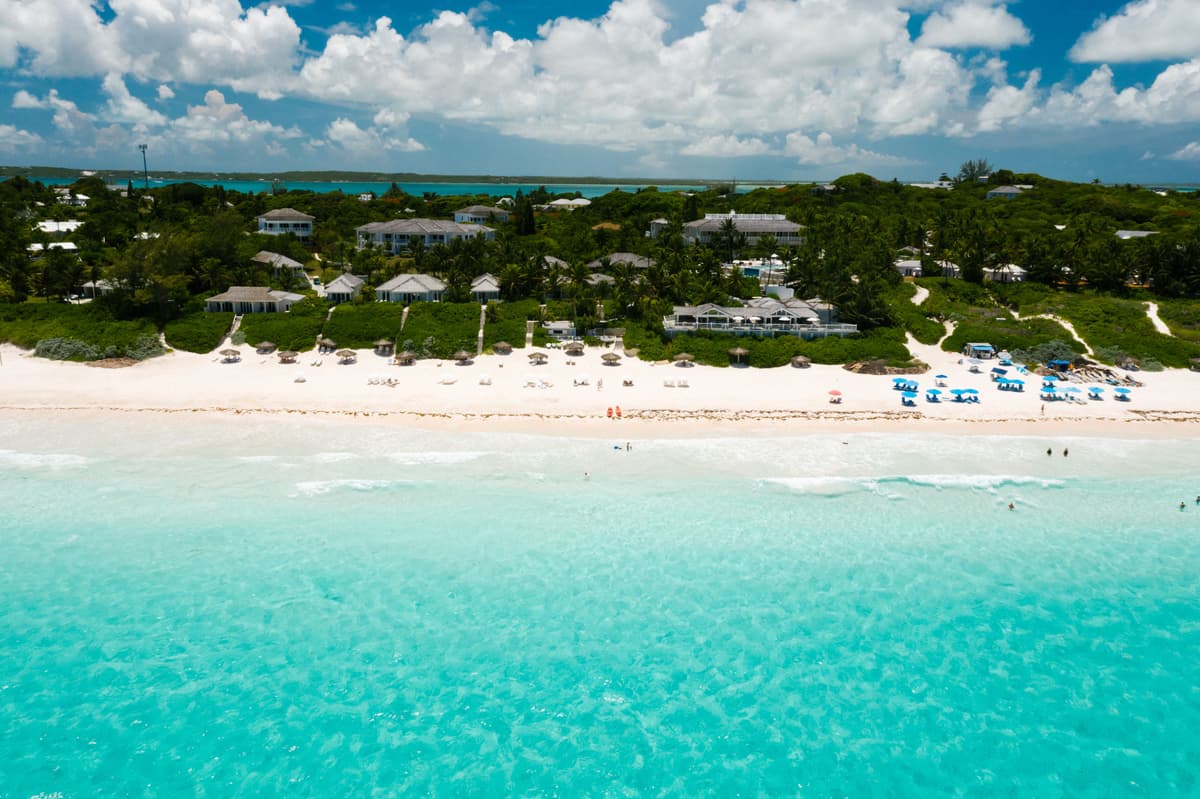
The Turks and Caicos Islands give American employers a rare mix of a U.S.-dollar economy, a tax-neutral environment, and a skilled, English-speaking workforce shaped largely by luxury tourism, financial services, and construction. Hiring in the Turks and Caicos Islands appeals to companies that want a Caribbean foothold without currency risk. Because the territory is a British Overseas Territory, employment is governed by local statute, and the minimum wage set in the Turks and Caicos Islands is enforced across every sector.
Key Facts About Employment in the Turks and Caicos Islands
Information Category | Details |
Minimum Wage in the Turks and Caicos Islands | USD 8.00 per hour generally; USD 9.00 per hour for Security, Manufacturing, Construction, and Banking. |
Standard Workweek | 44 hours standard. |
Payroll Frequency | Monthly or bi-weekly. |
Fiscal Year | April 1 to March 31. |
Main Employment Laws | Employment Ordinance. |
Employment Contracts in the Turks and Caicos Islands
The Employment Ordinance requires employers to give workers written particulars of their terms, and the law recognizes several contract types that you should match to the role.
- A permanent or indefinite contract continues until either party ends it with proper notice, and it is the most common arrangement for ongoing positions.
- A fixed-term contract runs for a defined period or until a stated date, after which it may be renewed or allowed to expire.
- A task-based contract is created to complete a specific project and ends when that work is finished.
- A casual contract covers irregular, as-needed work with no guaranteed hours, and it is common in the tourism and hospitality sectors that drive much of the local economy.
- A probationary contract typically lasts no more than three months and lets both sides assess fit before committing to a longer relationship.
To comply with employment law requirements in the Turks and Caicos Islands, every written contract should set out a clear set of terms.
- The contract should record the full names of the employer and the employee, along with the employee's job title and main duties.
- It should state the salary or wage, the pay interval, and the date on which continuous employment began.
- It should specify normal working hours, the length of any probationary period, and the notice period each side must give.
- It should describe leave entitlements, benefits, and any allowances the employer agrees to provide.
Payroll, Taxes, and Social Security in the Turks and Caicos Islands
The Turks and Caicos Islands levy no personal income tax, corporate income tax, capital gains tax, or property tax, so payroll in the Turks and Caicos Islands centers on two mandatory social contributions rather than wage taxes. The employer withholds the employee's share, adds its own portion, and remits the total to each board every month.
Employer Contributions
Contribution Type | Rate | Notes |
National Insurance (NIB) | 6.5% of gross earnings | This funds pensions along with sickness, maternity, injury, and survivor benefits, and they apply up to a monthly insurable earnings ceiling. |
National Health Insurance (NHIP) | 3% of gross earnings | This funds the public health plan and applies on earnings up to US$7,800 per month. |
Employee Contributions
Contribution Type | Rate | Notes |
National Insurance (NIB) | 5.5% of gross earnings | The employer deducts this share from the employee's pay in each period before remitting it. |
National Health Insurance (NHIP) | 3% of gross earnings | The combined employer and employee NHIP contribution is capped at roughly US$468 per month. |
The territory has no income tax, which means there is no wage-tax return, no progressive bracket, and no separate expatriate income-tax incentive scheme; the jurisdiction's tax neutrality is itself the main draw for employers and skilled hires.
Compensation & Benefits in the Turks and Caicos Islands
Compensation in the Turks and Caicos Islands combines a statutory wage floor with benefits that are largely employer-driven, because local law mandates fewer fringe benefits than many U.S. states do.
Benefit Type | Details |
Health insurance | Coverage under the National Health Insurance Plan is mandatory, and many employers add private or supplemental medical insurance to compete for talent. |
Allowances | Housing and transportation allowances are common, especially in tourism. For work-permit hires, employers should confirm any role-specific immigration conditions before finalizing the offer. |
Bonuses | Performance bonuses, service charges, and gratuities are widespread in hospitality, although they are discretionary rather than required by law. |
13th/14th salary | There is no statutory 13th- or 14th-month salary, so any year-end payment is offered entirely at the employer's discretion. |
Working Hours and Overtime in the Turks and Caicos Islands
The Employment Order sets the framework for working time, and the table below summarizes what employers must observe.
Item | Rule |
Standard workweek | Normal working hours are 44 hours per week. |
Weekly limits | Working hours cannot exceed 48 hours per week. |
Overtime compensation | Hours worked beyond normal hours are generally paid at 1.5 times the regular rate, and work performed on a public holiday is commonly paid at double time. |
Flexible and remote work | Remote and flexible arrangements are not specifically regulated, so employers may offer them by agreement as long as statutory hours, pay, and contributions are still honored. |
Leave and Statutory Time Off in the Turks and Caicos Islands
The Employment Ordinance and Employment Order establish the minimum leave that employees are entitled to receive.
Leave type | Details |
Paid annual leave | Employees are entitled to at least two weeks of vacation for each completed year of service, and any unused accrued leave is paid out on termination. |
Sick leave | Employees are entitled to up to 12 paid sick days per year, and a medical certificate is required when an illness lasts longer than two days. |
Maternity leave | Female employees receive at least 14 weeks of maternity leave, commonly paid in full for the first six weeks and at half pay for the following eight weeks. |
Paternity leave | There is no statutory paternity entitlement, so any paternity time off is granted at the employer's discretion. |
Compassionate leave | Compassionate or bereavement leave is also discretionary and is usually defined in company policy. |
The full list of public holidays observed in the Turks and Caicos Islands is set out below.
- New Year's Day
- Commonwealth Day
- Good Friday
- Easter Monday
- JAGS McCartney Day
- The King's Birthday
- Emancipation Day
- The National Day of Prayer and Thanksgiving
- Constitution Day, newly added as a public holiday for 2026
- National Youth Day
- National Heritage Day
- Christmas Day
- Boxing Day
Hiring and Onboarding Process in the Turks and Caicos Islands
- The employer's main task is establishing a compliant local presence, either by registering a business and obtaining a business license or by engaging an Employer of Record (EOR) that already holds the necessary local registrations.
- The employer should register with the National Insurance Board and the National Health Insurance Board to obtain employer numbers before the first payroll runs.
- The employer should issue a written contract that complies with the Employment Ordinance and collect the new hire's National Insurance number, National Health Insurance details, government-issued identification, proof of Islander status, and banking information.
- The employer should configure the payroll so that both contributions are deducted and remitted on time.
- For smooth onboarding, the employer should confirm the candidate's right to work, explain pay and benefits clearly, and document every term in writing, because oral changes are difficult to enforce later.
- Work permits in the Turks and Caicos Islands apply only when an employer hires non-Belongers, who require approval from the Immigration Department and the Work Permit Board before they may start.
Termination & Notice Periods in the Turks and Caicos Islands
- Notice should follow the Employment Ordinance minimums reflected by the Labor Tribunal: less than one month of service, 1 day; more than one month but less than one year, 2 weeks; one to five years, 1 month; more than five years, 2 months.
- An employee who resigns after at least one month of service must give no less than one week's notice, and either party may instead offer payment in lieu of notice.
- A dismissal must rest on a fair reason, which the law recognizes as conduct, capability, redundancy, illegality, or some other substantial reason, and a dismissal without a fair reason can be challenged as unfair.
- Severance pay applies to employees with at least two years of continuous service who are made redundant or laid off, and it is calculated as two weeks' basic wages for each year of service, pro-rated for any partial year.
Useful Resources
Check out Niural Global Payroll
Other articles
Hiring in the Bahamas
Hiring in the Dominican Republic
Disclaimer: This article is provided for informational purposes only and should not be relied on as legal advice or used as a substitute for advice from qualified legal counsel.